


You’ve been referred for an ADHD assessment, and that’s great. Whether you got to this point after months of info-gathering and resolve-strengthening, or someone simply said “Hey, I think it might make sense for you to look into ADHD”, you’re through the first big hurdle. And now, you’re waiting – and that can be irritating, even agonising. So, our lived experience team put this page together to help you make this period less overwhelming, and give you specific tools based on what you most need right now.
Waiting for your assessment is a weird limbo phase
You already suspect your brain works differently, but you don’t have confirmation yet. time can feel like you’re stuck between , unable to move ahead.
You’re in the very uncomfortable and unwelcoming waiting room of certainty called limbo. Kind of a “worst of both worlds” situation: you’re aware enough to notice the patterns that keep coming up in your life, but you’re still without official confirmation or support that might help.
And even though you might have received a few vague link dumps, they do little to clear up the confusion. “Neurodivergence ??” in your head. “Listen to ADHD podcasts” – okay, WHICH ones? Why those? What will I get from them? “Join a support group” – which one? How do I know if it’s right for me? What if I’m not ready for that?
Instead of feeling supported, you are just more overwhelmed. No, thank you.
Let’s make your “limbo” phase a bit less overwhelming and a lot more actionable!
Good news, you don’t have to wait passively if you are eager to do something even before getting your diagnosis.
You also don’t have to overload your brain with hours of podcasts and hundreds of pages of books, hoping to find one gem that will put everything in its place.
This guide is for you because even before your assessment, there are things you can learn, tools you can use, and support you can access right now.
But first, let’s see what headspace you are in.
How are you feeling about your assessment right now?
Everyone comes to this moment from a different place. You might be feeling relief, fear, curiosity, overwhelm — or all of these at once. There’s no right way to feel about being referred for an ADHD assessment and what it might mean for you personally. So we made this guide helpful for you, whatever mood you find yourself in right now.
I’m scared and uncertain
You’re worried about what this diagnosis might mean for your identity, your future, or how others see you. You’re not sure you want this label, or you’re afraid of what you might learn about yourself.
Start here: [You’re not imagining it]| [You don’t have to do this alone]
I want to learn everything
You’re ready to dive deep. You want to understand ADHD beyond the stereotypes, explore your own patterns, learn practical tools, and understand as much as you can about how your brain works.
Start here: [Understanding ADHD beyond the stereotypes] | [Exploring your own brain] | [Tools that help right now]
I need to prepare for the assessment
You want to know what to expect, how to answer the questions accurately, and how to gather the information you’ll need. You’re in practical mode.
Start here: [Preparing for your assessment]
You’re not imagining it
If you’re here, something resonated. Maybe you saw a social media post that made you cry because someone finally put words to your experience. Maybe a friend suggested you look into ADHD. Maybe you’ve been struggling for years and only now have a possible explanation. That matters. The fact that you’re questioning whether you’re neurodivergent – especially if you’ve “managed fine” until now – doesn’t mean you’re wrong. It often means you’ve been working much harder than you realised to appear “fine.”
Start here!

I didn’t think I was neurodivergent – until I learned what it really means
"How did no one ever notice??"
The amount of times this sentence is heard in our house, along with the dramatically exaggerated waving of arms, would definitely qualify for a sitcom catchphrase.
You see, reader, I’m what they call "late-diagnosed".
"Late" is relative, of course. For ADHD, "late diagnosis" can mean anything from above 60 for those above 60 to 25 for those who are 25. For Autism, some guidelines even go down to 12 as "late".
My own ADHD stamp (with the bonus traits from a handful of other neurodivergent conditions) came at 37, with the fancy PDF attachment. We already knew, we just didn’t know know.
Once confirmed, though, not one week goes by when I don’t do, say or remember something that so clearly reveals a neurodivergent trait that’s always been there.
So how did no one ever notice?

“What can a neurodivergent diagnosis give me if I got this far on my own?”
You’ve developed coping strategies and made it work so far. Hooray! But what’s working today might not work tomorrow — especially when life throws big changes at you like hormonal shifts, job changes, or major life transitions. A diagnosis can give you a baseline understanding of your brain so you can adapt when things change, rather than having to reverse-engineer everything from scratch during a crisis.
“Will I still be myself after an ADHD / Autism diagnosis?”
You won’t lose yourself – in fact, most people find the opposite happens. As you gain clarity and self-compassion, drop the shame around your struggles, and learn to unmask more, you might discover you’re more yourself than ever before. You’ll finally get to meet the version of yourself that isn’t constantly performing, compensating, or apologising for existing.
Understanding ADHD beyond the stereotypes
ADHD isn’t just “can’t sit still” or “bad at school.” It’s not something only hyperactive boys have, and it doesn’t disappear in adulthood. The stereotypes you’ve absorbed from media, teachers, or even well-meaning friends are often wrong – and they might be why you didn’t recognise yourself as neurodivergent sooner. Understanding what ADHD actually is (and isn’t) helps you see your own experiences more clearly.
ADHD
Main overview about ADHD: learn about presentations, history and basic concepts.
ADHD (Attention Deficit Hyperactivity Disorder) is a lifelong, hereditary neurological condition. A person with ADHD can be inattentive, hyperactive and impulsive in their internal mental processes as well as their outward presentation.
ADD (Attention Deficit Disorder) is the previous name of the condition and officially hasn’t been in use since 1987.
“Does ADHD mean you’re always hyperactive?”
“Don’t people grow out of ADHD?”
People don’t grow out of ADHD. Symptoms change from external hyperactivity to internal restlessness, and life transitions often unmask previously hidden ADHD.

“Doesn’t ADHD mostly affect boys?”
Girls with ADHD are real and underdiagnosed. Population studies show similar rates to boys, but referral bias and different presentations keep girls invisible. ADHD doesn’t discriminate by gender, but diagnostic bias does—people socialized as girls face 4+ year delays in diagnosis.
“Is ADHD just about not being able to pay attention?”
Attention is only one possible component of ADHD. We now also understand attention to be variable in ADHD, with a difficulty for the brain to self-regulate attention.
Key concepts & vocabulary
neurodivergence
Neurodivergent conditions include ADHD, Autism, OCD, Sensory Processing Disorder and specific learning difficulties, like dyslexia, dyscalculia and dysgraphia.

executive dysfunction
Executive functions are essential, they help us make plans, stay organized, pay attention, and keep our emotions in check. It plays a big role in making decisions and adapting to new situations.
Executive dysfunction can happen when these processes have a difference or impairment that affects everyday life.

emotional dysregulation
Emotional dysregulation is the inability to regulate the intensity and quality of emotions in order to generate an appropriate emotional response and return to an emotional baseline.
When someone has difficulty regulating their emotions, they are easily overstimulated and they can get upset or overwhelmed easily. On …
impulsivity
Impulsivity in ADHD is characterized by a shortened pause between impulse and action: a bright flash that leads immediately to behaviour before you can fully consider it. Impulsivity shows up in different forms: verbal (blurting out, interrupting), emotional (expressing strong feelings immediately), decision-making …
hyperactivity
Hyperactive Type is one of the ADHD subtypes. Hyperactivity can present in physical and mental symptoms. Hyperactive traits include fidgeting and other sensory-seeking behaviours, interrupting others when they talk or finishing their sentences for them, impulsive actions and thrill-seeking behaviour (with a reduced …
inattentive
Inattentive is one of the ADHD subtypes, also known as the distracted type. Inattentive traits include daydreaming, forgetfulness (not remembering the question while answering, forgetting things at home, following instructions with multiple sub-tasks), and difficulty focusing on a task that’s not engaging enough.
Rejection Sensitivity Dysphoria (RSD)
Rejection Sensitivity Dysphoria (RSD) is an intense emotional and physical response to perceived rejection, criticism, or the fear of falling short — experienced by many neurodivergent people. The hot flash of shame, the spiral of “what did I do wrong,” the doomsday scenarios building while the other person is simply …
co-occurring conditions
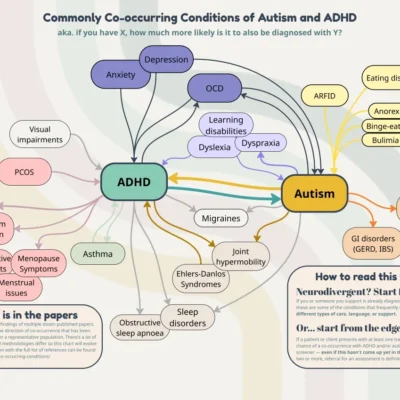
Co-occurrence means that certain neurodivergent traits and conditions naturally tend to appear together. When you’re neurodivergent in one way, you’re more likely to experience other forms of neurodivergence too – research shows this happens in up to 70% of cases. These patterns extend beyond just neurodevelopmental …
Exploring your own brain
Getting to know your patterns, triggers, needs, and strengths doesn’t require a diagnosis. This is about building self-awareness and self-compassion. When you understand WHY certain things are hard for you (and why other things come easily), you can stop blaming yourself and start working with your brain instead of against it.
Tools for self-discovery:

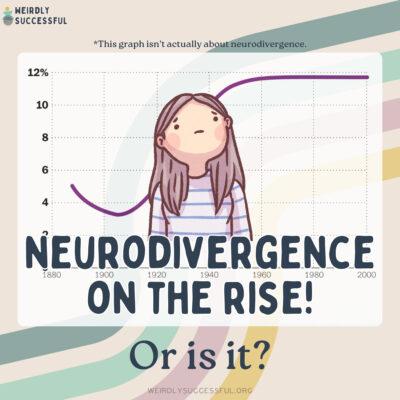
How To Make Your Life Neurodivergent-friendly
You’ve tried all the ADHD tips online, but nothing seems to stick. That’s because neurodivergent brains don’t come with universal solutions—what helps one person might not work for you at all. Here’s how to discover your specific adaptations and create a life that actually works for YOUR brain. Explore your needs, what environments you work best in, what overwhelms you, and what helps you regulate.
Why self-compassion is more important than self-care
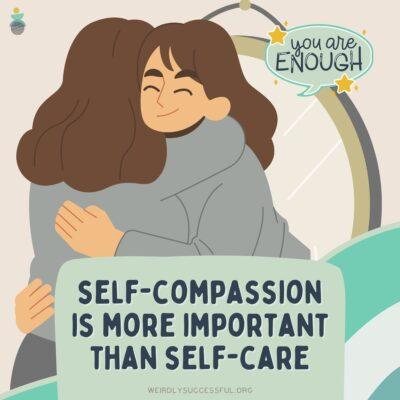
Self-compassion literally means what it says on the tin: you have compassion for yourself. You can feel empathy towards yourself, you can be kind, even loving towards yourself. But it is often overlooked in favour of self-care. Learn why it’s so crucial for every neurodivergent person to learn self-compassion.
How to spot if a product for ADHD is a rip-off: look out for these 10 red flags
Apps, productivity systems, quizzes for ADHD types, supplements, oh my! Not everything labelled with ADHD is actually good for ADHD.
In this article, we’ll show you how to tell if a product or service is just using ADHD as a buzzword for a quick cash grab.
What’s the difference between being ‘lazy’ and experiencing executive dysfunction?
Laziness is not simply “not doing” something. A lazy person could do the thing, would have the energy to do so, but chooses not to. And they don’t care about it at all. Lazy people are okay with the task not being done. Their inner monologue isn’t even mentioning the task. Lazy people don’t think …
Preparing for your ADHD assessment
The assessment process can feel daunting, especially when you’re asked to provide examples from childhood or explain patterns you’ve never had words for before. You might worry about answering “correctly” or whether you’ll be able to remember the right details. This section helps you understand what the assessment is actually looking for and how to prepare in a way that gives an accurate picture of your brain.
Resources to help you prepare:
- What do the ADHD assessment questions really mean? – Understanding the ASRS screening questions, what they’re actually asking, and how to answer them accurately (including why you should discount your coping strategies), with real-life examples and what masking looks like. COMING SOON.
- DIVA questionnaire guide – How to gather childhood examples and life stories when your memory is patchy, what counts as evidence, and how to prepare for the diagnostic interview. COMING SOON.
Tools that help right now
You don’t need a diagnosis to start making your life easier. You don’t need permission from a clinician to use timers, try body doubling, or manage your energy differently. If a tool helps you, it helps you – that’s all the validation you need. These are neuroaffirming approaches that work WITH your brain, not against it.
ADHD Planners: Bad advice, myths, solutions and best choices
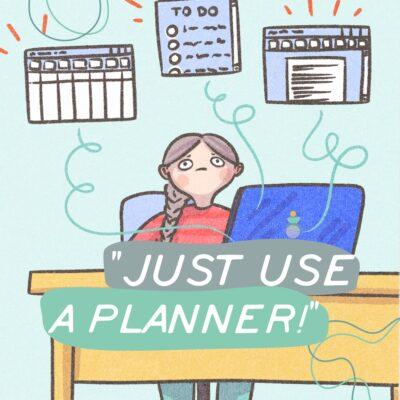
One of the most common pieces of advice for people with ADHD is ‘just use a planner’. I’ve been using planners and notebooks since the age of 10, and as a neurodivergent person, let me tell you one thing: this advice, on its own, is bullsh*t.
body doubling
Body doubling means doing a task or errand with someone else or in the presence of someone else so it’s easier to start or follow through.
Their supportive presence helps create a safe, anchoring environment that makes it easier to start and follow through with tasks — without pressure or judgment.
It is one of the strategies for managing focus and creating a flow for work, even if you feel lost and overwhelmed by executive dysfunction.
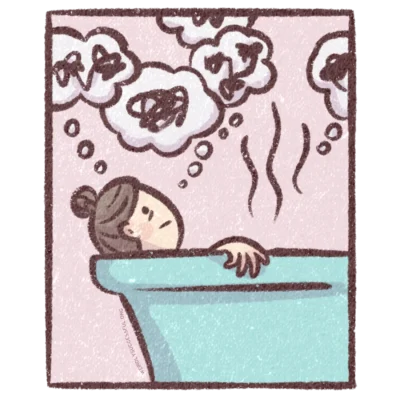
“I have tried traditional “self-care” activities, and they don’t do anything for me. What am I doing wrong?”
Nothing! Neurodivergent brains need more time to process, decompress, and recharge.

“Why do traditional productivity methods make me feel worse instead of better?”
Traditional productivity methods are tips and tricks designed for people who already have all the resources and opportunity to be productive – they just need fine-tuning. When it comes to executive dysfunction, we need more than an optimal route.
You don’t have to do this alone
The waiting period doesn’t have to be wasted time. Every bit of self-understanding you gain, every tool you discover that makes life easier, every moment of self-compassion you practice – these all matter, regardless of what happens with your assessment. You’re not waiting for permission to understand yourself better. You’re already on that journey.
Find your people:
- Weirdly Successful Learning Community – Expert-led, lived-experience peer support for neurodivergent adults. Connect with others who get it, learn from people who’ve navigated this journey, and access ongoing support throughout your assessment process and beyond. COMING SOON.



 How To Make Your Life Neurodivergent-friendly
Leave a Reply