hypervigilance
Hypervigilance is a state of heightened, sustained alertness where your nervous system stays oriented toward detecting threat, even when no real danger is present. It can feel like …

Weirdly Successful
Dedicated to helping you understand, navigate and enjoy your weird & wonderful neurodivergent life.
Emotional regulation, identity, self-image, burnout
Hypervigilance is a state of heightened, sustained alertness where your nervous system stays oriented toward detecting threat, even when no real danger is present. It can feel like …
Your diagnosis is yours. You decide who hears about it and when. This post covers what you're actually required to share about ADHD or Autism — at work, with the DVLA, with doctors …
ADHD speech difficulties are usually about effort and disorganisation rather than a complete loss of access. You might notice more grammatical errors, mispronounced words, …
Special interests are deeply focused areas of engagement that autistic people experience with a level of emotional investment, sustained attention, and joy that goes well beyond …
Cognitive inflexibility, also erroneously referred to as rigid thinking, is a diagnostic characteristic of autism that describes difficulty shifting between tasks, perspectives, or …
Because your nervous system is doing something smart, so good for you! :)
When you rewatch a familiar show, your brain isn't processing anything new — no plot twists to manage, no …
Intolerance of uncertainty (IU) describes the degree to which a nervous system needs predictability in order to function — not as a preference, but as a genuine operational …
Rejection Sensitivity Dysphoria (RSD) is an intense emotional and physical response to perceived rejection, criticism, or the fear of falling short — experienced by many …
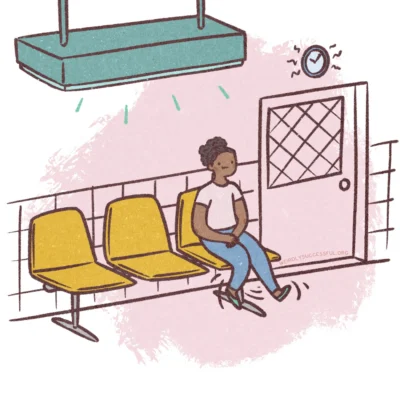
Fidgeting involves small, often unconscious movements—bouncing your leg, tapping your fingers, clicking a pen, doodling, twirling your hair. These movements help regulate focus and …
Fidgeting serves as an involuntary mechanism for self-regulating attention and enhancing alertness, especially during tasks perceived as cognitively demanding (hard to do) or …
Neurodivergent brains don't come with universal solutions—what helps one person might not work for you at all. So if you've tried all the ADHD tips online, but nothing seems to …
One aspect of ADHD is difficulties in the brain's impulse self-regulation systems, which in childhood can manifest as movement that's deemed excessive, but this is neither required …
Attention is only one possible component of ADHD. We now also understand attention to be variable in ADHD, with a difficulty for the brain to self-regulate attention.
Justice sensitivity is the heightened awareness of rule violations and inconsistencies, paired with an intense emotional and physiological response. For many neurodivergent people, …
Impulsive decisions can make us feel powerless. Even if we ignore the possible negative consequences of the decisions, simply feeling that we did something we couldn’t notice …
Impulsivity describes a group of traits. In ADHD, it is characterized by a shortened pause between impulse and action: a bright flash that leads immediately to behaviour before you …
A verbal shutdown might appear to be “nothing” from the outside, but actually, a lot is going on beneath the surface. Language, speech, even just on the technical side, …
Verbal shutdown is a temporary inability to produce speech despite having intact language and thoughts - an involuntary neurological response to overwhelm. It's when words exist in …
Like what you see? Join our newsletter and we’ll let you know when we release more resources