“Is ADHD just a lack of willpower?”
You know what needs doing. You want to do it. You still can't start. In ADHD, that gap is neurological, and willpower was never the missing ingredient.


You know what needs doing. You want to do it. You still can't start. In ADHD, that gap is neurological, and willpower was never the missing ingredient.
Cognitive inflexibility, also erroneously referred to as rigid thinking, is a diagnostic characteristic of autism that describes difficulty shifting between tasks, perspectives, or plans. The label captures how the trait looks from outside — but the internal experience is better understood through monotropism: a processing style that goes deep rather than wide. The depth that makes sustained focus, thoroughness, and reliability possible is the same depth that makes switching costly. The difficulty and the strength are the same mechanism.

Because routine is architecture you can rely on when everything else is wobbly or up in the air.
When you do the same things in the same order, your brain doesn't have to build the day from scratch. The route is known, the sequence is mapped, all the decisions have already been made, and you are good to go. This frees up precious cognitive resources for the things that actually need your attention.

Laziness is not simply “not doing” something. A lazy person could do the thing, would have the energy to do so, but chooses not to. And they don’t care about it at all. Lazy people are okay with the task not being done. Their inner monologue isn’t even mentioning the task. Lazy people don’t think …
Inertia is the experience of being unable to start (or stop) an activity despite wanting to. It's a common neurodivergent experience related to executive function, and not caused by laziness, procrastination or lack of motivation. Like a car without fuel, no amount of pressing the gas pedal will help when the resources needed for action aren't available.
Waiting mode is a psychological state characterized by heightened anticipation or anxiety while awaiting a specific outcome or event.
In the neurodivergent, especially ADHD community it usually means the period before an event that needs focus or attention spent in a sort of paralysing waiting mode, not being able to do little else until the event is over.
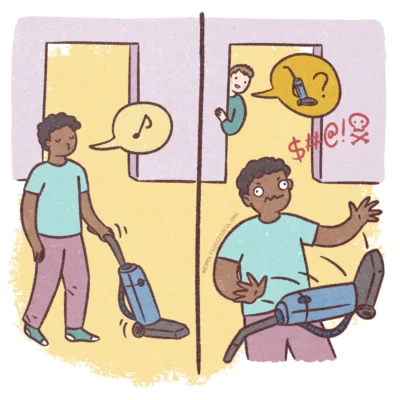
Demand avoidance means appearing opposed to doing something when it's perceived as a demand, especially from an authority figure - even if you actually want to do the thing. While it may look like defiance or stubbornness to others, it's actually an involuntary self-preservation response triggered by threats to autonomy. This response happens automatically, not as a conscious decision to be difficult.
Autistic burnout refers to a state of physical, mental, and emotional exhaustion experienced by autistic people. It is a result of prolonged exposure to overwhelming sensory, social, and cognitive demands, often in an environment that does not accommodate their needs.

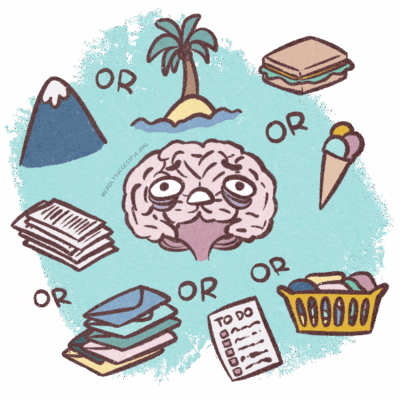
Decision fatigue refers to the deteriorating quality of decision-making after a long period of decision-making activity. It means you feel mentally exhausted from making too many choices.

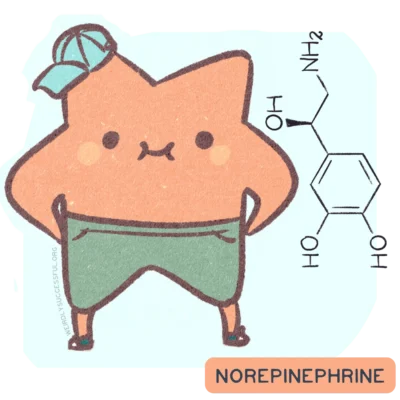
Norepinephrine (also called noradrenaline) is a neurotransmitter produced by the locus coeruleus in the brainstem. It regulates alertness, attention, arousal, and the stress response, and works alongside dopamine in the prefrontal cortex to support executive function. Your prefrontal cortex needs norepinephrine in an optimal range — too little, and you can't sustain focus, too much, and the brain shifts to reactive, survival-oriented processing.
In ADHD, norepinephrine signalling is dysregulated, contributing to difficulties with sustained attention, emotional regulation, and the stress response.

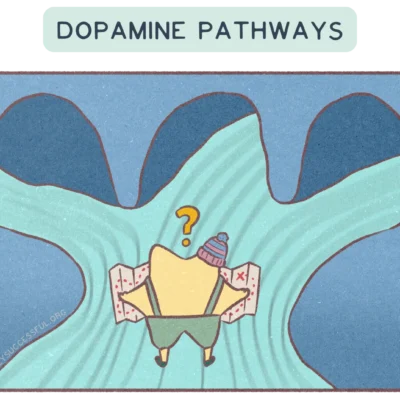
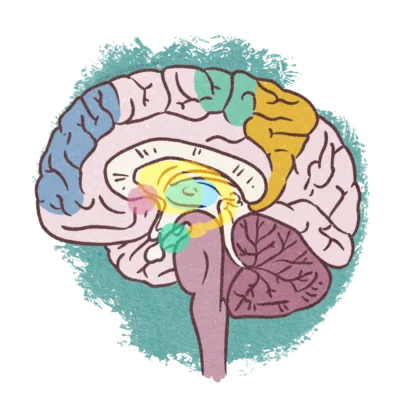
The dopamine system is the network of neurons, pathways, and chemical machinery that produces, delivers, uses, and recycles dopamine throughout the brain. It's one of the most-discussed systems in ADHD, and with good reason — differences in how this system works are closely linked to difficulties with motivation, attention, reward, and the ability to sustain effort on tasks that aren't immediately interesting.

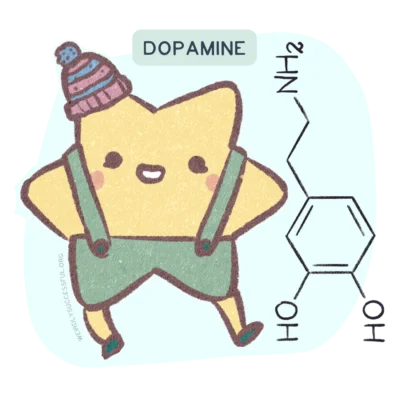
Dopamine is a neurotransmitter involved in many different functions, including movement, motivation, reward, and pleasure. It is one of the most important neurotransmitters you have to get to know if you want to understand ADHD better.
Inattentive is one of the ADHD subtypes, also known as the distracted type. Inattentive traits include daydreaming, forgetfulness (not remembering the question while answering, forgetting things at home, following instructions with multiple sub-tasks), and difficulty focusing on a task that’s not engaging enough.

Executive functions are essential, they help us make plans, stay organized, pay attention, and keep our emotions in check. It plays a big role in making decisions and adapting to new situations.
Executive dysfunction can happen when these processes have a difference or impairment that affects everyday life.
Body doubling means doing a task or errand with someone else or in the presence of someone else so it's easier to start or follow through.
Their supportive presence helps create a safe, anchoring environment that makes it easier to start and follow through with tasks -- without pressure or judgment.
It is one of the strategies for managing focus and creating a flow for work, even if you feel lost and overwhelmed by executive dysfunction.

One of the most common pieces of advice for people with ADHD is ‘just use a planner’. I’ve been using planners and notebooks since the age of 10, and as a neurodivergent person, let me tell you one thing: this advice, on its own, is bullsh*t.