• Skip to main content
  • Skip to header right navigation
  • Skip to site footer
Weirdly Successful

Weirdly Successful

Dedicated to helping you understand, navigate and enjoy your weird & wonderful neurodivergent life.

  • About Us
    • The team
    • The mission
    • What we do
    • Events
  • Learn
    • Understanding Neurodivergence
    • Diagnosis & Assessment
    • Productivity & Planning
    • Sensory & Body
    • Emotions & Regulation
    • Health & Wellbeing
    • Work & Career
  • Free Resources
    • Latest Articles
    • Neurodivergent Glossary
    • Questions & Answers
    • Resource Library
  • Contact Us
    • Send a message
    • Book a Curiosity Call

FAQ

Everything you wanted to know about neurodivergence, but had no-one to ask. Answering your questions, making sense of your wonderings, addressing your concerns and worries, and explaining everything inbetween.

Choose a topic

communicationcoping strategiesdecisionsdiagnosisemotionsenergyfocusharmidentitylanguagememorymotivationmovementprejudiceproductivityself-careself-confidenceself-imageself-regulationsensorysocietyspeechstresssupporttime

Newest answers

energy focus motivation self-regulation support

“Why do I do better with a routine?”

Because routine is architecture you can rely on when everything else is wobbly or up in the air.

When you do the same things in the same order, your brain doesn’t have to build the day from scratch. The route is known, the sequence is mapped, all the decisions have already been made, and you are good to go. This frees up precious cognitive resources for the things that actually need your attention.

Read the longer answer“Why do I do better with a routine?”
coping strategies energy self-care self-regulation sensory

“Why do I watch the same show over and over?”

Because your nervous system is doing something smart, so good for you! 🙂

When you rewatch a familiar show, your brain isn’t processing anything new — no plot twists to manage, no unfamiliar characters to track, no sudden shifts in tone to adjust to.

Read the longer answer“Why do I watch the same show over and over?”
energy movement self-regulation

“Is fidgeting and stimming the same thing?”

Fidgeting is similar to stimming, but they serve different purposes. While stimming tends to function as emotional regulation (a way to manage overwhelming feelings or sensory input), fidgeting more often serves focus regulation and energy discharge. The movements might look the same from the outside, but the internal experience and function can be quite different.

Read the longer answer“Is fidgeting and stimming the same thing?”
energy focus movement self-regulation

“Why do people fidget when they are hyperactive?”

Fidgeting serves as an involuntary mechanism for self-regulating attention and enhancing alertness, especially during tasks perceived as cognitively demanding (hard to do) or monotonous (i.e. boring and repetitive).

Read the longer answer“Why do people fidget when they are hyperactive?”
coping strategies diagnosis energy identity society support

“Don’t people grow out of ADHD?”

People don’t grow out of ADHD. Symptoms change from external hyperactivity to internal restlessness, and life transitions often unmask previously hidden ADHD.

Read the longer answer“Don’t people grow out of ADHD?”
diagnosis identity prejudice support

“Doesn’t ADHD mostly affect boys?”

Girls with ADHD are real and underdiagnosed. Population studies show similar rates to boys, but referral bias and different presentations keep girls invisible. ADHD doesn’t discriminate by gender, but diagnostic bias does—people socialized as girls face 4+ year delays in diagnosis.

Read the longer answer“Doesn’t ADHD mostly affect boys?”
diagnosis energy focus movement speech

“Does ADHD mean you’re always hyperactive?”

One aspect of ADHD is difficulties in the brain’s impulse self-regulation systems, which in childhood can manifest as movement that’s deemed excessive, but this is neither required for ADHD nor the whole story of what hyperactivity means.

Read the longer answer“Does ADHD mean you’re always hyperactive?”
emotions focus memory self-regulation time

“Is ADHD just about not being able to pay attention?”

Attention is only one possible component of ADHD. We now also understand attention to be variable in ADHD, with a difficulty for the brain to self-regulate attention.

Read the longer answer“Is ADHD just about not being able to pay attention?”
diagnosis harm identity prejudice support

“Is ADHD caused by trauma?”

While ADHD correlates with a higher number of adverse childhood experiences, hundreds of studies show that traumatic experiences are not a causative factor – if anything, it’s the other way around.

Read the longer answer“Is ADHD caused by trauma?”
diagnosis identity self-image

“Will I still be myself after an ADHD / Autism diagnosis?”

You won’t lose yourself – in fact, most people find the opposite happens. As you gain clarity and self-compassion, drop the shame around your struggles, and learn to unmask more, you might discover you’re more yourself than ever before. You’ll finally get to meet the version of yourself that isn’t constantly performing, compensating, or apologising for existing.

Read the longer answer“Will I still be myself after an ADHD / Autism diagnosis?”
diagnosis identity self-image support

“I don’t want to become my label and use my neurodivergence as an excuse”

If you’re worried about this, you’re already not that person. Asking for accommodations (like quiet spaces, reminders, breaks) is self-care and self-advocacy. The difference between advocating for your needs and being manipulative comes down to respect: are you communicating your limits while taking responsibility, or are you demanding others tolerate harmful behaviour?

Read the longer answer“I don’t want to become my label and use my neurodivergence as an excuse”
coping strategies diagnosis identity self-confidence

“Why get an ADHD / autism diagnosis just to get a label?”

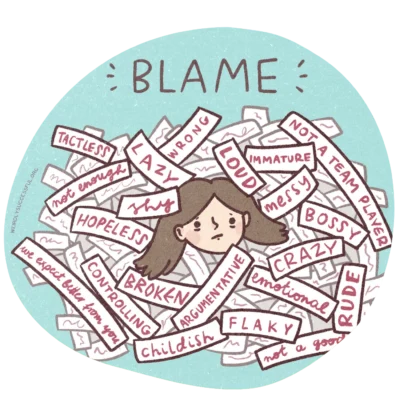
Whether you like it or not, you already have labels — lazy, scatterbrain, weird, messy — given to you by others. You have probably internalised many of them over the decades, too. The difference with a diagnosis is that this label is one you choose for yourself based on understanding, and not a mean, untrue one imposed on you out of frustration or judgment.

Read the longer answer“Why get an ADHD / autism diagnosis just to get a label?”
coping strategies diagnosis identity self-image support

“What can a neurodivergent diagnosis give me if I got this far on my own?”

You’ve developed coping strategies and made it work so far. Hooray! But what’s working today might not work tomorrow — especially when life throws big changes at you like hormonal shifts, job changes, or major life transitions. A diagnosis can give you a baseline understanding of your brain so you can adapt when things change, rather than having to reverse-engineer everything from scratch during a crisis.

Read the longer answer“What can a neurodivergent diagnosis give me if I got this far on my own?”
diagnosis identity self-image

“I’m afraid of a diagnosis, I don’t want to be fixed!”

Good news: a neurodivergent diagnosis isn’t about fixing you, because you’re not broken. What it actually does is give you a framework to understand how your brain works and what you need – so you can finally stop forcing neurotypical solutions on yourself.

Read the longer answer“I’m afraid of a diagnosis, I don’t want to be fixed!”
coping strategies energy self-care self-regulation sensory support

“I have tried traditional “self-care” activities, and they don’t do anything for me. What am I doing wrong?”

Nothing! Neurodivergent brains need more time to process, decompress, and recharge.

Read the longer answer“I have tried traditional “self-care” activities, and they don’t do anything for me. What am I doing wrong?”
decisions self-regulation

How can I recognize when I’m about to make an impulsive decision?

Impulsive decisions can make us feel powerless. Even if we ignore the possible negative consequences of the decisions, simply feeling that we did something we couldn’t notice “in time” or catch while it was happening can be very vulnerable and disempowering. After the fact, it sometimes feels obvious – ‘duh, this was silly; I made …

Read the longer answerHow can I recognize when I’m about to make an impulsive decision?
communication language speech stress

What’s actually happening when I go into verbal shutdown?

A verbal shutdown might appear to be “nothing” from the outside, but actually, a lot is going on beneath the surface. Language, speech, even just on the technical side, are very complicated, even before you start adding the social layers on top of it (word choices, cadence, implications of tone of voice, non-verbal communication aspects). …

Read the longer answerWhat’s actually happening when I go into verbal shutdown?
coping strategies focus productivity

“Why do traditional productivity methods make me feel worse instead of better?”

Traditional productivity methods are tips and tricks designed for people who already have all the resources and opportunity to be productive – they just need fine-tuning. When it comes to executive dysfunction, we need more than an optimal route.

Read the longer answer“Why do traditional productivity methods make me feel worse instead of better?”
focus motivation

What’s the difference between being ‘lazy’ and experiencing executive dysfunction?

Laziness is not simply “not doing” something. A lazy person could do the thing, would have the energy to do so, but chooses not to. And they don’t care about it at all. Lazy people are okay with the task not being done. Their inner monologue isn’t even mentioning the task. Lazy people don’t think …

Read the longer answerWhat’s the difference between being ‘lazy’ and experiencing executive dysfunction?

Free Resources for Neurodivergent Adults

Get our research-backed, experience-validated strategies & guides for a neurodivergent work & life that you can adapt to what success looks like to you.

Create a free account to get your goodies!

Is the button not working? No worries!
Sometimes ad-blocks stop all pop-ups, even if they are not ads.
This might be the case if nothing happens when you click the button.
Here’s another, non-pop-up way to sign up, please try if this works!

By signing up you allow us to send you Weirdly Successful’s newsletter with practical tips, strategies, and optional training material.
You can unsubscribe any time. Our Privacy Policy makes for a great summer reading!

Weirdly Successful is a 100% neurodivergent-run non-profit, developing strategies & frameworks for neurodivergent adults.

  • E-mail
  • Instagram
  • Mastodon
  • Tumblr
  • Pinterest

DISCLAIMER: All content on this website is for informational purposes only, and does not substitute for medical advice. For medical advice, diagnosis or treatment, consult a medical professional or healthcare provider.

While we strive to represent up-to-date and scientifically accurate information, our authors are not medical professionals unless where specifically noted. All opinions are the authors’ own.

Weirdly Successful’s authors and collaborators are not liable for risks or issues
associated with using or acting upon the information on our site.

All original content Copyright © 2026 · Weirdly Successful · All Rights Reserved.

Privacy Policy