


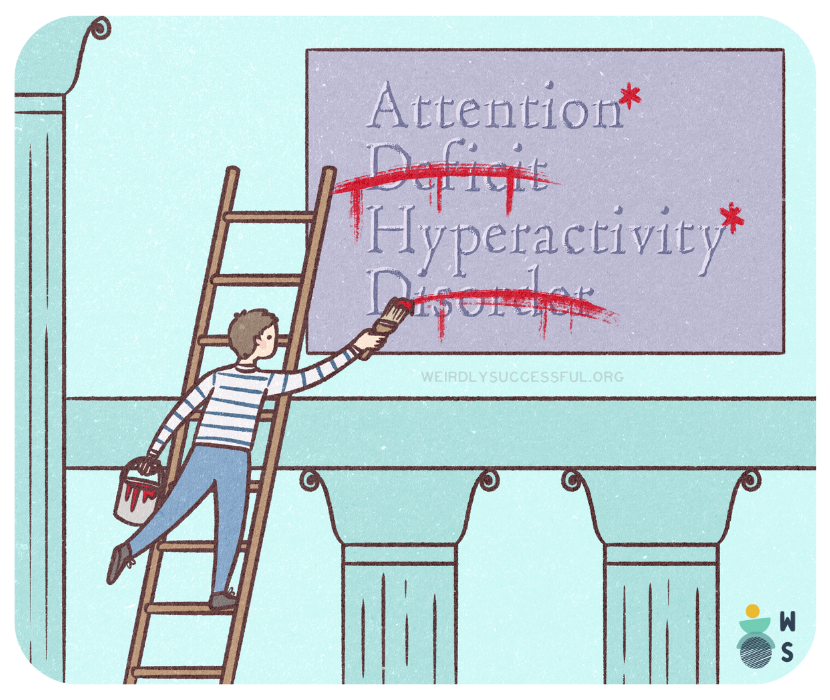
Attention is only one possible component of ADHD, and here’s the thing: we now understand that the core issue isn’t actually having less attention—it’s that the brain struggles to self-regulate where that attention goes. 12
This is why the name “Attention Deficit Hyperactivity Disorder” is so misleading. It creates the impression that people with ADHD can’t focus on anything, when the reality is far more complex.
Many people with ADHD experience hyperfocus—intense, hours-long concentration on tasks that engage their interest—while struggling to direct attention to less engaging but necessary tasks. The problem isn’t the amount of attention available, but the brain’s ability to direct that attention. This can confuse people looking in from the outside, as it seems like a deliberate choice to focus on some things while not on others.
ADHD affects multiple areas of executive function. Beyond attention regulation, it affects working memory, impulse control, emotional regulation, time perception, task initiation, and planning as well.3 In fact, difficulties with emotion regulation affect the majority of people with ADHD and predict greater functional impairment than attention symptoms alone.
The narrow focus on “attention deficit” has historically led to many people—particularly those who can hyperfocus or who have developed strong coping strategies—being overlooked for diagnosis despite significant struggles in other areas.







 “Is ADHD caused by trauma?”