• Skip to main content
  • Skip to header right navigation
  • Skip to site footer
Weirdly Successful

Weirdly Successful

Dedicated to helping you understand, navigate and enjoy your weird & wonderful neurodivergent life.

  • About Us
    • The team
    • The mission
    • What we do
    • Events
  • Learn
    • Understanding Neurodivergence
    • Diagnosis & Assessment
    • Productivity & Planning
    • Sensory & Body
    • Emotions & Regulation
    • Health & Wellbeing
    • Work & Career
  • Free Resources
    • Latest Articles
    • Neurodivergent Glossary
      • My Glossary
    • Questions & Answers
    • Resource Library
  • Contact Us
    • Send a message
    • Book a Curiosity Call
  • LOGIN

time blindness

focus memory time
by
Weirdly Successful
Weirdly Successful (author)  

First published: 28 June, 2023 | Last edited: 12 January, 2026 |🕒 Reading Time: < 1 minute | 🔗
Login / Register to save article for later

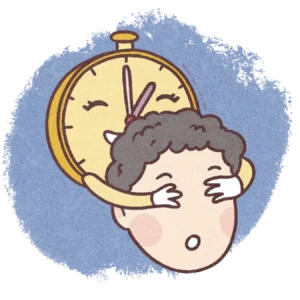
Time blindness is one of the executive dysfunctions. Time blindness is when it’s tough to grasp the passing of time. It usually means you under- or overestimate the time a project will take. Time blindness makes it tricky to manage schedules, deadlines, and planning. It can lead to procrastination, forgetfulness, and feeling overwhelmed or rushed.

Examples: “I’ll need 5 minutes to get ready” and then it takes you 45 minutes, or, in reverse, procrastinating on a task thinking you’ll need hours to finish it, and when you get to do it, you’re done in 10 minutes.

« Back to the index


Related Questions

“Is ADHD just about not being able to pay attention?”

Attention is only one possible component of ADHD. We now also understand attention to be variable in ADHD, with a difficulty for the brain to self-regulate attention.

emotions self-regulation
Explore answer

“Why does coffee make me sleepy when I have ADHD?”

Does coffee calm you down instead of waking you up? ADHD brains can respond to stimulants by settling down.

food medication sleep
Explore answer

“Does caffeine help with ADHD?”

Caffeine acts on the same dopamine pathways as ADHD medication. So it would make sense that coffee can work as a viable stimulant, but research found it helps less than you think, and it can get worse over time.

coping strategies energy food medication
Explore answer

Related Glossary Terms

executive dysfunction

Executive functions are essential, they help us make plans, stay organized, pay attention, and keep our emotions in check. It plays a big role in making decisions and adapting to new situations. Executive dysfunction can happen when these processes have a difference or impairment that affects everyday life.

energy motivation
Learn more

The neurodivergent brain

The brain is the organ behind every neurodivergent trait you experience — from how you pay attention to how you process emotion to how you sleep. Neurodivergent brains use the same basic structures and chemical messengers as any brain, but the tuning is different: different dopamine activity in reward circuits, different balance between excitatory and inhibitory signalling, different default mode network behaviour.

anxiety emotions food motivation neurobiology self-regulation sleep
Learn more

object constancy

Object constancy is the notion that you remain connected and aware of items or people even when they are not visible or physically around. Difficulties in object constancy lead to the "out of sight, out of mind" experience, which is very common with ADHD folk. Not to be confused with object permanence, which is a developmental stage in babies, and relates to them believing things genuinely stop existing when not in sight.

communication relationships
Learn more

waiting mode

Waiting mode is a psychological state characterized by heightened anticipation or anxiety while awaiting a specific outcome or event. In the neurodivergent, especially ADHD community it usually means the period before an event that needs focus or attention spent in a sort of paralysing waiting mode, not being able to do little else until the event is over.

motivation
Learn more

Related Articles

The Weird Winter Holiday Workbook – a neurodivergent-friendly Christmas-ish planner

There are lots of winter holiday planners out there. Not a lot of them are particularly ADHD, Autism or neurodivergence-friendly, though! So we created this one to reduce holiday stress, hassle and overwhelm so you can:...

Read article

How to spot if a product for ADHD is a rip-off: look out for these 10 red flags

Apps, productivity systems, quizzes for ADHD types, supplements, oh my! Not everything labelled with ADHD is actually good for ADHD. In this article, we'll show you how to tell if a product or service is just using ADHD as a buzzword for a quick cash grab.

support
Read article

Previous Post:allistic
Next Post:executive dysfunction

About the Author

  • Weirdly Successful

    Weirdly Successful

    A 100% neurodivergent team — Adam Dobay, Livia Farkas and Nora Selmeczi — bringing together lived experience, adult education expertise, clinical training and NHS co-production to create friendly, science-backed resources that help neurodivergent adults figure out what actually works for them

    View all posts

Free Resources for Neurodivergent Adults

Get our research-backed, experience-validated strategies & guides for a neurodivergent work & life that you can adapt to what success looks like to you.

Create a free account to get your goodies!

Is the button not working? No worries!
Sometimes ad-blocks stop all pop-ups, even if they are not ads.
This might be the case if nothing happens when you click the button.
Here’s another, non-pop-up way to sign up, please try if this works!

By signing up you allow us to send you Weirdly Successful’s newsletter with practical tips, strategies, and optional training material.
You can unsubscribe any time. Our Privacy Policy makes for a great summer reading!

Weirdly Successful is a 100% neurodivergent-run non-profit, developing strategies & frameworks for neurodivergent adults.

  • E-mail
  • Instagram
  • Mastodon
  • Tumblr
  • Pinterest

DISCLAIMER: All content on this website is for informational purposes only, and does not substitute for medical advice. For medical advice, diagnosis or treatment, consult a medical professional or healthcare provider.

While we strive to represent up-to-date and scientifically accurate information, our authors are not medical professionals unless where specifically noted. All opinions are the authors’ own.

Weirdly Successful’s authors and collaborators are not liable for risks or issues
associated with using or acting upon the information on our site.

All original content Copyright © 2026 · Weirdly Successful · All Rights Reserved.

Privacy Policy