
Support You Can Immediately Access After An ADHD Referral
ADHD post-referral support -- because there are already things you can do before you get assessed for a diagnosis.

A 100% neurodivergent team — Adam Dobay, Livia Farkas and Nora Selmeczi — bringing together lived experience, adult education expertise, clinical training and NHS co-production to create friendly, science-backed resources that help neurodivergent adults figure out what actually works for them

ADHD post-referral support -- because there are already things you can do before you get assessed for a diagnosis.
SSRIs are a type of antidepressant, the name stands for Selective serotonin reuptake inhibitor. They are often successfully used to treat OCD, PMDD, anxiety, PTSD and depression.
Neuroaffirming or neuro-affirmative refers to practices, approaches, or environments that recognize and affirm the neurodiversity of society and the neurodivergence of individuals.
An informal and tongue-in-cheek term for neurodivergence, often used in a funny way.
Hyperfixation is a term often used in the context of neurodivergent individuals, particularly Autistics and ADHDers. It refers to an intense and prolonged focus on a particular subject, topic, or activity, often at the price of excluding everything else.
Hyperfocus is a cognitive state characterized by an intense concentration and absorption in a particular task or activity to the point of excluding or neglecting other stimuli or responsibilities.
Working memory is one of the executive functions. It is our mental scratchpad, where we temporarily hold and play with info to help with tasks like problem-solving and learning. It's key for everyday stuff but has limited space, so juggling too much can be tough, especially for people with ADHD, who have an even more limited space.
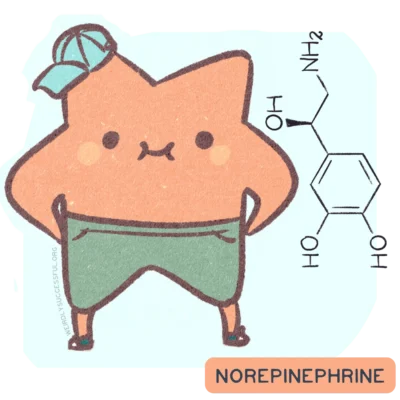
Also known as noradrenaline – a neurotransmitter involved in alertness, attention, and response to stress.
Serotonin is a neurotransmitter that helps regulate mood, sleep, and appetite, keeping us balanced.
Neurotransmitters are chemicals that help brain cells “talk” to each other, controlling thoughts and feelings. Dopamine, serotonin and norepinephrine are all neurotransmitters.
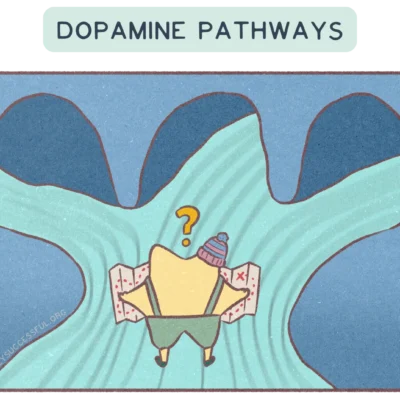
A brain network where dopamine travels, affecting motivation and reward, but also pain and many other functions.

Sensory avoiding, also known as sensory under-responsivity, refers to a pattern of behaviour where individuals actively try to avoid or minimise exposure to sensory stimuli. These individuals may have a heightened sensitivity to sensory input and may find certain sensations overwhelming or discomforting. As a result, they may engage in behaviours such as avoiding crowded …