• Skip to main content
  • Skip to header right navigation
  • Skip to site footer
Weirdly Successful

Weirdly Successful

Dedicated to helping you understand, navigate and enjoy your weird & wonderful neurodivergent life.

  • About Us
    • The team
    • The mission
    • What we do
    • Events
  • Learn
    • Understanding Neurodivergence
    • Diagnosis & Assessment
    • Productivity & Planning
    • Sensory & Body
    • Emotions & Regulation
    • Health & Wellbeing
    • Work & Career
  • Free Resources
    • Latest Articles
    • Neurodivergent Glossary
    • Questions & Answers
    • Resource Library
  • Contact Us
    • Send a message
    • Book a Curiosity Call

Sensory & Body

Sensory processing, body awareness and physical environment

Content type: Explainer❓Explainer

“Why do I like pressure on my body?”

self-regulation sensory touch

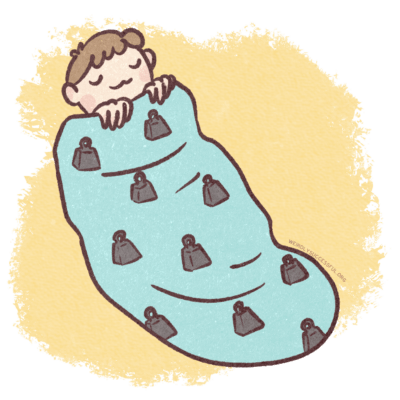
If you like pressure on your body — heavy blankets, tight hugs, snug clothes — your nervous system is using a regulation strategy it figured out on its own.

Read more“Why do I like pressure on my body?”
Content type: Glossary Entry📖Glossary Entry

the mTOR pathway

communication memory neurobiology pain self-regulation sensory

The mTOR pathway is a signalling system inside every cell that regulates the balance between building new structures and recycling old ones. In autistic brains, this pathway runs …

Read morethe mTOR pathway
Content type: Glossary Entry📖Glossary Entry

restricted repetitive behaviours (RRBs)

joy self-regulation sensory stress

Restricted Repetitive Behaviours (RRBs) is the clinical term for a broad group of autistic traits including stimming, echolalia, routines, persistent interests, and sensory …

Read morerestricted repetitive behaviours (RRBs)
Content type: Explainer❓Explainer

“Is fidgeting and stimming the same thing?”

energy movement self-regulation

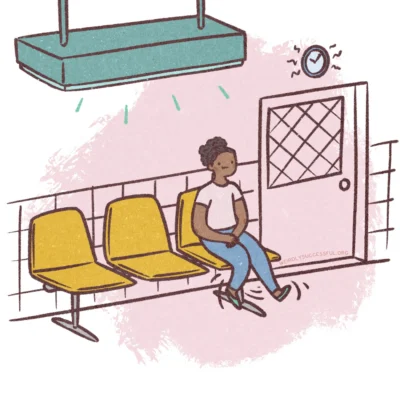
Fidgeting is similar to stimming, but they serve different purposes. While stimming tends to function as emotional regulation (a way to manage overwhelming feelings or sensory …

Read more“Is fidgeting and stimming the same thing?”
Content type: Glossary Entry📖Glossary Entry

fidgeting

energy focus self-regulation

Fidgeting involves small, often unconscious movements—bouncing your leg, tapping your fingers, clicking a pen, doodling, twirling your hair. These movements help regulate focus and …

Read morefidgeting
Content type: Article💡Article

How To Make Your Life Neurodivergent-friendly

communication self-care support

You've tried all the ADHD tips online, but nothing seems to stick. That's because neurodivergent brains don't come with universal solutions—what helps one person might not work for …

Read moreHow To Make Your Life Neurodivergent-friendly
Content type: Glossary Entry📖Glossary Entry

proprioception

balance orientation sensory

Proprioception refers to the sensory system that provides information about body position, movement, and spatial orientation without visual input (i.e. knowing where our body parts …

Read moreproprioception
Content type: Article💡Article

I Wasn’t ‘Just A Bit Stressed Out’

self-care sensory society support

Exploring the impact of internalised ableism made me re-evaluate my misinterpreted autistic and ADHD traits.

Read moreI Wasn’t ‘Just A Bit Stressed Out’
Content type: Glossary Entry📖Glossary Entry

transitions

energy sensory stress

Transitioning, in the context of neurodiversity, refers to the process of moving from one state, activity, or place to another. It involves a shift in attention, focus, and …

Read moretransitions
Content type: Glossary Entry📖Glossary Entry

deep pressure

self-care self-regulation sensory support touch

Deep pressure is a natural sensory need where firm, consistent pressure (like heavy blankets or tight hugs) helps tension melt away from your body. Many people naturally seek this …

Read moredeep pressure
Content type: Glossary Entry📖Glossary Entry

ARFID

eating sensory taste

ARFID stands for Avoidant/Restrictive Food Intake Disorder. It is characterized by highly selective eating habits, often to the point of nutritional deficiency. Unlike anorexia or …

Read moreARFID
Content type: Glossary Entry📖Glossary Entry

habituation

neurobiology sensory

Habituation is a biological reaction mechanism where if a non-threatening stimuli keeps repeating, the response to it lowers over time. In neurodivergence, the brain's reduced …

Read morehabituation
Content type: Glossary Entry📖Glossary Entry

interoception

bodily sensations eating hunger pain sleep

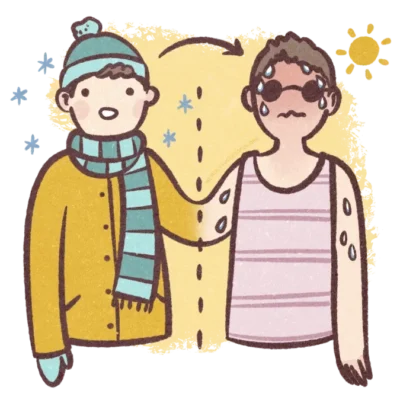
Interoception is the ability to notice and identify feelings inside one's body, like thirst or hunger. It also includes the ability to notice and regulate temperature changes or …

Read moreinteroception
Content type: Glossary Entry📖Glossary Entry

misophonia

hearing pain sensory sound

Misophonia is a neurodivergent condition characterized by an intense emotional and physiological response to specific sounds. People with misophonia experience strong negative …

Read moremisophonia
Content type: Glossary Entry📖Glossary Entry

sensory avoiding

eating pain self-regulation sensory sound touch

Sensory avoiding, also known as sensory under-responsivity, refers to a pattern of behaviour where individuals actively try to avoid or minimise exposure to sensory stimuli. These …

Read moresensory avoiding
Content type: Glossary Entry📖Glossary Entry

sensory seeking

eating hearing movement self-regulation sensory touch

Sensory-seeking refers to a behavioural pattern or tendency in neurodivergent folks where they actively seek out and engage in sensory experiences or stimuli. People may have a …

Read moresensory seeking
Content type: Glossary Entry📖Glossary Entry

hypersensitivity

light sensory sound touch

Hypersensitivity, also known as sensory over-responsivity, is a condition characterized by an extreme sensitivity or heightened response to sensory stimuli from the environment. …

Read morehypersensitivity
Content type: Glossary Entry📖Glossary Entry

PMDD

energy pain periods

PMDD is Premenstrual Disphoric Disorder, and refers to a severe, disabling form of PMS.

Read morePMDD

Like what you see? Join our newsletter and we’ll let you know when we release more resources
Free Resources for Neurodivergent Adults

Get our research-backed, experience-validated strategies & guides for a neurodivergent work & life that you can adapt to what success looks like to you.

Create a free account to get your goodies!

Is the button not working? No worries!
Sometimes ad-blocks stop all pop-ups, even if they are not ads.
This might be the case if nothing happens when you click the button.
Here’s another, non-pop-up way to sign up, please try if this works!

By signing up you allow us to send you Weirdly Successful’s newsletter with practical tips, strategies, and optional training material.
You can unsubscribe any time. Our Privacy Policy makes for a great summer reading!

Weirdly Successful is a 100% neurodivergent-run non-profit, developing strategies & frameworks for neurodivergent adults.

  • E-mail
  • Instagram
  • Mastodon
  • Tumblr
  • Pinterest

DISCLAIMER: All content on this website is for informational purposes only, and does not substitute for medical advice. For medical advice, diagnosis or treatment, consult a medical professional or healthcare provider.

While we strive to represent up-to-date and scientifically accurate information, our authors are not medical professionals unless where specifically noted. All opinions are the authors’ own.

Weirdly Successful’s authors and collaborators are not liable for risks or issues
associated with using or acting upon the information on our site.

All original content Copyright © 2026 · Weirdly Successful · All Rights Reserved.

Privacy Policy