
• Skip to main content
  • Skip to header right navigation
  • Skip to site footer
Weirdly Successful

Weirdly Successful

Dedicated to helping you understand, navigate and enjoy your weird & wonderful neurodivergent life.

  • About Us
    • The team
    • The mission
    • What we do
    • Events
  • Learn
    • Understanding Neurodivergence
    • Diagnosis & Assessment
    • Productivity & Planning
    • Sensory & Body
    • Emotions & Regulation
    • Health & Wellbeing
    • Work & Career
  • Free Resources
    • Latest Articles
    • Neurodivergent Glossary
      • My Glossary
    • Questions & Answers
    • Resource Library
  • Contact Us
    • Send a message
    • Book a Curiosity Call
  • LOGIN

“Is fidgeting and stimming the same thing?”

energy movement self-regulation
by
Livia Farkas (author)  

First published: 5 March, 2026 | Last edited: 6 March, 2026 |🕒 Reading Time: 2 minutes | 🔗
Login / Register to save article for later

Fidgeting and stimming often get used interchangeably online, but they describe different experiences with different purposes. Understanding the distinction can help you name what you’re experiencing more accurately and recognise what your brain and body need in the moment.

If you need a quick recap on definitions, here you go:
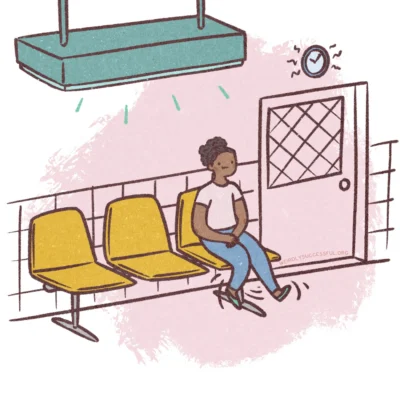
fidgeting

Fidgeting involves small, often unconscious movements—bouncing your leg, tapping your fingers, clicking a pen, doodling, twirling your hair. These movements help regulate focus and discharge energy, particularly for people with ADHD. Fidgeting provides the sensory input your brain needs to stay alert and engaged, especially during tasks that don’t provide enough stimulation on their own. It’s about maintaining the right level of arousal (alertness) to concentrate or releasing restless energy when big movements aren’t possible.
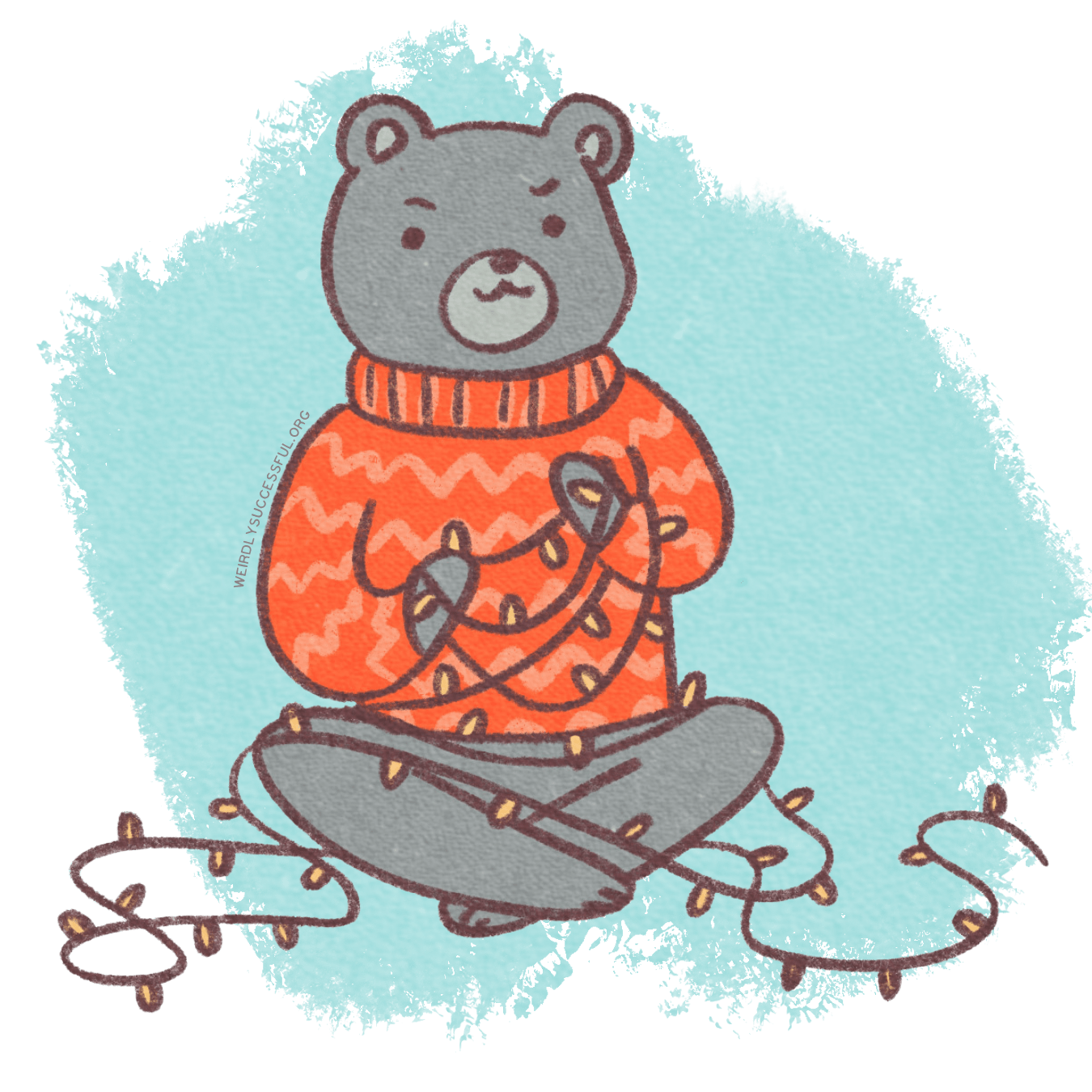
stimming

Stimming (self-stimulatory behaviour) tends to be more intense, deliberate, and repetitive. It can include hand flapping, rocking, making repetitive sounds, spinning, examining textures intensely, or listening to the same song on repeat for hours. Stimming is historically associated with autism and serves primarily as emotional and sensory regulation—a way to manage overwhelming feelings, process sensory input, express joy or excitement, or meet a physiological need for specific sensory feedback. Autistic people often describe stimming as a need rather than a choice.

“What’s the key difference between stimming and fidgeting?“

The movements might look similar from the outside—leg bouncing could be either fidgeting or stimming, depending on context—but the internal experience and purpose are different.

The main distinction lies in function: fidgeting typically serves focus regulation and energy discharge, whilst stimming serves emotional and sensory regulation. Fidgeting helps you concentrate or releases excess energy. Stimming helps you manage emotional overwhelm, process sensory information, or fulfil a neurological need for specific input.

“How can I tell if I am fidgeting or stimming?“

Ask yourself: What does this movement help with right now?

  • If it’s helping you focus on a task, stay alert during a boring meeting, or discharge restless energy when you can’t move in bigger ways—that’s likely fidgeting.
  • If it’s helping you manage overwhelming emotions, process intense sensory input, express strong feelings (like excitement or distress), or fulfil a need that feels non-negotiable—that’s likely stimming.

“Can someone do both fidgeting and stimming?“

Yes. Many neurodivergent people (particularly those who are AuDHD) both fidget and stim. The same person might fidget during a work call to maintain focus and stim when they’re overwhelmed after a difficult day. Understanding the distinction helps you recognise what you need and communicate that to others.

“Why does the distinction matter?“

Language matters because it helps us name our experiences with clarity. Knowing whether you’re fidgeting or stimming can help you identify what your nervous system needs in the moment and advocate for appropriate accommodations and support.

It also respects the historical context of these terms—stimming has been particularly pathologised in the autism community, and conflating the terms can dilute understanding of each phenomenon’s distinct purpose and the specific experiences of autistic people.

« Back to the index


Related Questions

“Why do people fidget when they are hyperactive?”

Fidgeting serves as an involuntary mechanism for self-regulating attention and enhancing alertness, especially during tasks perceived as cognitively demanding (hard to do) or monotonous (i.e. boring and repetitive).

focus
Explore answer

“Why do I do better with a routine?”

Because routine is architecture you can rely on when everything else is wobbly or up in the air. When you do the same things in the same order, your brain doesn't have to build the day from scratch. The route is known, the sequence is mapped, all the decisions have already been made, and you are good to go. This frees up precious cognitive resources for the things that actually need your attention.

focus motivation support
Explore answer

“Why do I watch the same show over and over?”

Because your nervous system is doing something smart, so good for you! 🙂 When you rewatch a familiar show, your brain isn't processing anything new — no plot twists to manage, no unfamiliar characters to track, no sudden shifts in tone to adjust to.

coping strategies self-care sensory
Explore answer

Related Glossary Terms

synaptic pruning

Synaptic pruning is the process by which the brain refines its connections during development, removing synapses that are used less frequently while strengthening active ones. In autistic brains, this process works differently — two independent cleanup systems (the neuron's internal recycling programme and the brain's specialised immune cells) are both less aggressive, meaning significantly more connections are retained. This denser wiring contributes to many recognisable autistic experiences: sensory intensity, deep focus, rich pattern recognition, difficulty filtering, and the challenge of switching between tasks or environments.

focus neurobiology pain sensory
Learn more

fidgeting

Fidgeting involves small, often unconscious movements—bouncing your leg, tapping your fingers, clicking a pen, doodling, twirling your hair. These movements help regulate focus and discharge energy, particularly for people with ADHD. Fidgeting provides the sensory input your brain needs to stay alert and engaged, especially during tasks that don't provide enough stimulation on their own. It's about maintaining the right level of arousal (alertness) to concentrate or releasing restless energy when big movements aren't possible.

focus
Learn more

sensory seeking

Sensory-seeking refers to a behavioural pattern or tendency in neurodivergent folks where they actively seek out and engage in sensory experiences or stimuli. People may have a heightened desire for sensory input and actively seek activities or environments that provide intense or stimulating sensations.

eating hearing sensory touch
Learn more

hyperactivity

Hyperactive Type is one of the ADHD subtypes. Hyperactivity can present in physical and mental symptoms. Hyperactive traits include fidgeting and other sensory-seeking behaviours, interrupting others when they talk or finishing their sentences for them, impulsive actions and thrill-seeking behaviour (with a reduced sense of danger), having many ideas and blurting them out.

thoughts
Learn more

Related Articles

How To Make Your Life Neurodivergent-friendly

You've tried all the ADHD tips online, but nothing seems to stick. That's because neurodivergent brains don't come with universal solutions—what helps one person might not work for you at all. Here's how to discover your specific adaptations and create a life that actually works for YOUR brain. Explore your needs, what environments you work best in, what overwhelms you, and what helps you regulate.

communication self-care support
Read article

I Wasn’t ‘Just A Bit Stressed Out’

Exploring the impact of internalised ableism made me re-evaluate my misinterpreted autistic and ADHD traits.

self-care sensory society support
Read article

Previous Post:fidgeting
Next Post:Rejection Sensitivity Dysphoria (RSD)

About the Author

  • Livia Farkas

    Livia Farkas is an adult education specialist with a joy-centred approach and a sharp sense for simplifying complex ideas using silly visual metaphors.

    Since 2008, she's written 870+ articles, developed 294 distinct techniques, and co-created 8 online courses with Adam—with 5,302 alumni learning neurodivergent-friendly approaches to time management, goal setting, self-care, and small business management.

    Her life goal is to be a walking permission slip for neurodivergent adults.

    View all posts

Free Resources for Neurodivergent Adults

Get our research-backed, experience-validated strategies & guides for a neurodivergent work & life that you can adapt to what success looks like to you.

Create a free account to get your goodies!

Is the button not working? No worries!
Sometimes ad-blocks stop all pop-ups, even if they are not ads.
This might be the case if nothing happens when you click the button.
Here’s another, non-pop-up way to sign up, please try if this works!

By signing up you allow us to send you Weirdly Successful’s newsletter with practical tips, strategies, and optional training material.
You can unsubscribe any time. Our Privacy Policy makes for a great summer reading!

Weirdly Successful is a 100% neurodivergent-run non-profit, developing strategies & frameworks for neurodivergent adults.

  • E-mail
  • Instagram
  • Mastodon
  • Tumblr
  • Pinterest

DISCLAIMER: All content on this website is for informational purposes only, and does not substitute for medical advice. For medical advice, diagnosis or treatment, consult a medical professional or healthcare provider.

While we strive to represent up-to-date and scientifically accurate information, our authors are not medical professionals unless where specifically noted. All opinions are the authors’ own.

Weirdly Successful’s authors and collaborators are not liable for risks or issues
associated with using or acting upon the information on our site.

All original content Copyright © 2026 · Weirdly Successful · All Rights Reserved.

Privacy Policy