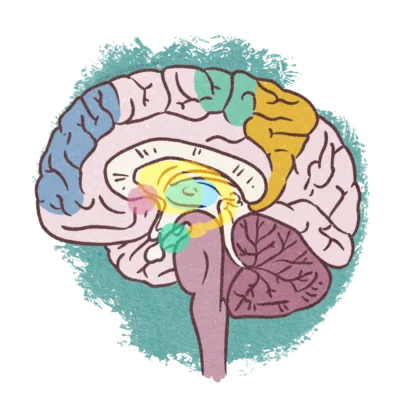
The neurodivergent brain
The brain is the organ behind every neurodivergent trait you experience — from how you pay attention to how you process emotion to how you sleep. Neurodivergent brains use the same …

Weirdly Successful
Dedicated to helping you understand, navigate and enjoy your weird & wonderful neurodivergent life.
The brain is the organ behind every neurodivergent trait you experience — from how you pay attention to how you process emotion to how you sleep. Neurodivergent brains use the same …
No, ADHD is not overdiagnosed. More people are recognised because of better diagnostic criteria, destigmatisation and awareness.
ADHD traits are human traits, but for ADHD brains they show up multiple times a day, not just during stressful patches.
You know what needs doing. You want to do it, you might even have the internal motivation to do so. You still can't start. In ADHD, that gap is neurological, and willpower was …
Direct communication is a pared-down, efficient way of speaking, where the words mean what they mean — no subtext to decode, no softening layer to read past. For many autistic …
Literal thinking is a precision-oriented processing style common in autistic people, where words, questions, and instructions are interpreted according to their exact meaning …
Pattern recognition is a thinking style common in autistic people, involving a tendency to notice underlying structures, connections, and regularities across many areas of life — …
Special interests are deeply focused areas of engagement that autistic people experience with a level of emotional investment, sustained attention, and joy that goes well beyond …
Cognitive inflexibility, also erroneously referred to as rigid thinking, is a diagnostic characteristic of autism that describes difficulty shifting between tasks, perspectives, or …
Synaptic pruning is the process by which the brain refines its connections during development, removing synapses that are used less frequently while strengthening active ones. In …
Intolerance of uncertainty (IU) describes the degree to which a nervous system needs predictability in order to function — not as a preference, but as a genuine operational …
Restricted Repetitive Behaviours (RRBs) is the clinical term for a broad group of autistic traits including stimming, echolalia, routines, persistent interests, and sensory …
Rejection Sensitivity Dysphoria (RSD) is an intense emotional and physical response to perceived rejection, criticism, or the fear of falling short — experienced by many …
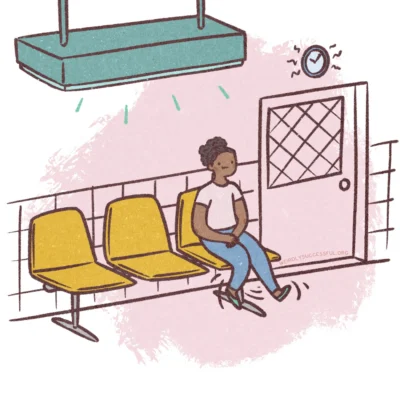
Fidgeting involves small, often unconscious movements—bouncing your leg, tapping your fingers, clicking a pen, doodling, twirling your hair. These movements help regulate focus and …
Fidgeting serves as an involuntary mechanism for self-regulating attention and enhancing alertness, especially during tasks perceived as cognitively demanding (hard to do) or …
Neurodivergent brains don't come with universal solutions—what helps one person might not work for you at all. So if you've tried all the ADHD tips online, but nothing seems to …
People don't grow out of ADHD. Symptoms change from external hyperactivity to internal restlessness, and life transitions often unmask previously hidden ADHD.
Girls with ADHD are real and underdiagnosed. Population studies show similar rates to boys, but referral bias and different presentations keep girls invisible. ADHD doesn't …
Like what you see? Join our newsletter and we’ll let you know when we release more resources