
• Skip to main content
  • Skip to header right navigation
  • Skip to site footer
Weirdly Successful

Weirdly Successful

Dedicated to helping you understand, navigate and enjoy your weird & wonderful neurodivergent life.

  • About Us
    • The team
    • The mission
    • What we do
    • Events
  • Learn
    • Understanding Neurodivergence
    • Diagnosis & Assessment
    • Productivity & Planning
    • Sensory & Body
    • Emotions & Regulation
    • Health & Wellbeing
    • Work & Career
  • Free Resources
    • Latest Articles
    • Neurodivergent Glossary
    • Questions & Answers
    • Resource Library
  • Contact Us
    • Send a message
    • Book a Curiosity Call

transitions

energy sensory stress
by
Livia Farkas (author)  

First published: 16 September, 2024 | Last edited: 28 March, 2026 || 📚🕒 Reading Time: 2 minutes ||

Transitions, in the context of neurodiversity, refer to the process of moving from one state, activity, or place to another. It involves a shift in attention, focus, and cognitive resources, and if this shift is too overwhelming, it can cause inertia.

For neurodivergent folk, it may require additional time, support, and strategies to manage effectively.

Transitioning can encompass a wide range of changes, from minor daily shifts like moving from one task to another to major life changes such as transitioning from school to work or from living at home to independent living.

Differences in transitioning are usually associated with autism, but anyone with sensory sensitivities can benefit from adjustments around transitioning if it helps them.
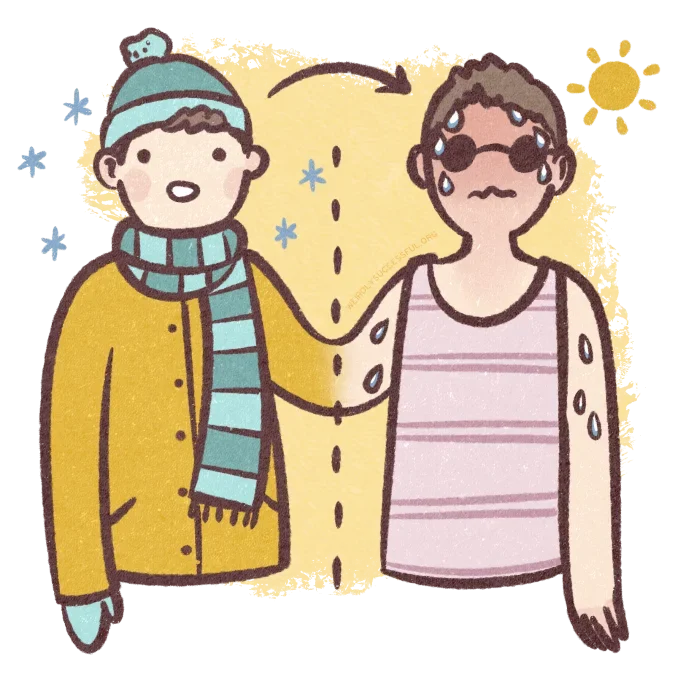
Why is transitioning so challenging for some neurodivergent people?

Moving from one state or activity to another can be a very overwhelming experience, especially if you’re trying to adjust to a change in stimuli or information, and switching contexts.

These can include changes in temperature, sensations on our bodies, and more. For example:

  • going outside when it’s hot from the cold flat
  • travelling to a warm place during your winter
  • leaving the nice, toasty bed on a cold morning
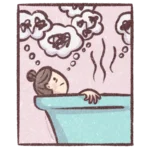
  • going into the water for a shower or a swim
  • coming out of the water to dry up
  • going into a dark room from the light
  • leaving the dark movie theatre and entering daylight again
  • getting dressed and wearing clothes
  • taking clothes off

Transitions are hard for neurodivergent people for reasons that compound each other: cognitive inflexibility makes it difficult to let go of the current frame, while intolerance of uncertainty makes the “what next?” moment feel genuinely destabilising rather than just mildly annoying.

How to help with transitions?

The overwhelm of transitioning can lead to sensory overwhelm, so it’s important to have support systems ready to ease these processes.

As with context switching, you can try factoring time in to adjust before and after an activity you know you’ll need more time to transition into or out of, or have time to decompress.

Sometimes getting tired during the day can make transitions require more effort, so for example, if you notice that the later it is, the harder it is for you to go and take a shower, you can try and move your showering time ahead and do it while you still have the executive function to do it with less effort.

Body doubling can also help, either by having someone to talk you through the task or just to chat with you to distract you from the uncomfortable feeling while in transition mode.

Also, you can add helpful support items to your adjustment toolkit. A few examples:

  • soft, comfortable and warm bathrobes for after showering
  • warm, seamless socks for cold mornings
  • a playlist with your favourite songs for dreary mornings
  • nice smelling (or no fragrance) soap and shampoo that’s gentle on your skin
  • cute or pretty accessories that make you smile
  • fairy lights or dimmable lights for dark days instead of harsh lights
  • a comfortable pair of sunglasses for sunny days
  • fruity toothpaste and a soft-bristled toothbrush
  • not-sticky, fast-absorbing body lotion that helps with itchy skin and putting it on improves your circulation
  • anything that can make the overwhelming task or transition more comfortable for you.

Related Questions

"Why do I watch the same show over and over?"

coping strategies self-care self-regulation
Explore answer

"I have tried traditional "self-care" activities, and they don't do anything for me. What am I doing wrong?"

coping strategies self-care self-regulation support
Explore answer

"Why do I like pressure on my body?"

self-regulation touch
Explore answer

"What's the difference between verbal shutdown, selective mutism, and being non-speaking?"

communication speech voice
Explore answer

"Why do I do better with a routine?"

focus motivation self-regulation support
Explore answer

"Is fidgeting and stimming the same thing?"

movement self-regulation
Explore answer

"Why do people fidget when they are hyperactive?"

focus movement self-regulation
Explore answer

"Don't people grow out of ADHD?"

coping strategies diagnosis identity society support
Explore answer

"Does ADHD mean you're always hyperactive?"

diagnosis focus movement speech
Explore answer

"What's actually happening when I go into verbal shutdown?"

communication language pain speech voice
Explore answer
« Back to the index

Related Terms

synaptic pruning

Synaptic pruning is the process by which the brain refines its connections during development, removing synapses that are used less frequently while strengthening active ones. In autistic brains, this process works differently — two independent cleanup systems (the neuron's internal recycling programme and the brain's specialised immune cells) are both less aggressive, meaning significantly more connections are retained. This denser wiring contributes to many recognisable autistic experiences: sensory intensity, deep focus, rich pattern recognition, difficulty filtering, and the challenge of switching between tasks or environments.

Learn more
focus neurobiology pain self-regulation
restricted repetitive behaviours (RRBs)

Restricted Repetitive Behaviours (RRBs) is the clinical term for a broad group of autistic traits including stimming, echolalia, routines, persistent interests, and sensory sensitivities. Despite the pathologising name, these patterns serve real purposes — self-regulation, cognitive energy conservation, and genuine enjoyment. They are how an autistic nervous system manages a world that doesn't come with enough predictability built in.

Learn more
joy self-regulation
night terrors

Night terrors are episodes of intense fear during sleep that involve screaming, physical movement, and autonomic arousal (racing heart, rapid breathing, sweating). Unlike nightmares, they occur during non-REM sleep with no memory of the event afterwards. Night terrors affect both children and adults, with higher prevalence in neurodivergent populations, particularly those with ADHD. They're triggered by sleep disruption, stress, hormonal changes, and sometimes medication, reflecting both neurological and environmental factors.

Learn more
periods sleep
demand avoidance

Demand avoidance means appearing opposed to doing something when it's perceived as a demand, especially from an authority figure - even if you actually want to do the thing. While it may look like defiance or stubbornness to others, it's actually an involuntary self-preservation response triggered by threats to autonomy. This response happens automatically, not as a conscious decision to be difficult.

Learn more
communication focus motivation
special interests

Special interests are deeply focused areas of engagement that autistic people experience with a level of emotional investment, sustained attention, and joy that goes well beyond typical hobbies. Clinically categorised under restricted repetitive behaviours, special interests are one of the defining characteristics of autism — and for most autistic adults, they are a primary source of motivation, regulation, identity, and connection. Between 75% and 95% of autistic people have at least one special interest, and 82% have more than one.

Learn more
communication interests joy self-regulation
rigid thinking (cognitive inflexibility)

Cognitive inflexibility, also erroneously referred to as rigid thinking, is a diagnostic characteristic of autism that describes difficulty shifting between tasks, perspectives, or plans. The label captures how the trait looks from outside — but the internal experience is better understood through monotropism: a processing style that goes deep rather than wide. The depth that makes sustained focus, thoroughness, and reliability possible is the same depth that makes switching costly. The difficulty and the strength are the same mechanism.

Learn more
communication emotions focus motivation thoughts
Previous Post:context switching
Next Post:decompressing

About the Author

  • Livia Farkas

    Livia Farkas is an adult education specialist with a joy-centred approach and a sharp sense for simplifying complex ideas using silly visual metaphors.

    Since 2008, she's written 870+ articles, developed 294 distinct techniques, and co-created 8 online courses with Adam—with 5,302 alumni learning neurodivergent-friendly approaches to time management, goal setting, self-care, and small business management.

    Her life goal is to be a walking permission slip for neurodivergent adults.

    View all posts

Free Resources for Neurodivergent Adults

Get our research-backed, experience-validated strategies & guides for a neurodivergent work & life that you can adapt to what success looks like to you.

Create a free account to get your goodies!

Is the button not working? No worries!
Sometimes ad-blocks stop all pop-ups, even if they are not ads.
This might be the case if nothing happens when you click the button.
Here’s another, non-pop-up way to sign up, please try if this works!

By signing up you allow us to send you Weirdly Successful’s newsletter with practical tips, strategies, and optional training material.
You can unsubscribe any time. Our Privacy Policy makes for a great summer reading!

Weirdly Successful is a 100% neurodivergent-run non-profit, developing strategies & frameworks for neurodivergent adults.

  • E-mail
  • Instagram
  • Mastodon
  • Tumblr
  • Pinterest

DISCLAIMER: All content on this website is for informational purposes only, and does not substitute for medical advice. For medical advice, diagnosis or treatment, consult a medical professional or healthcare provider.

While we strive to represent up-to-date and scientifically accurate information, our authors are not medical professionals unless where specifically noted. All opinions are the authors’ own.

Weirdly Successful’s authors and collaborators are not liable for risks or issues
associated with using or acting upon the information on our site.

All original content Copyright © 2026 · Weirdly Successful · All Rights Reserved.

Privacy Policy