
• Skip to main content
  • Skip to header right navigation
  • Skip to site footer
Weirdly Successful

Weirdly Successful

Dedicated to helping you understand, navigate and enjoy your weird & wonderful neurodivergent life.

  • About Us
    • The team
    • The mission
    • What we do
    • Events
  • Learn
    • Understanding Neurodivergence
    • Diagnosis & Assessment
    • Productivity & Planning
    • Sensory & Body
    • Emotions & Regulation
    • Health & Wellbeing
    • Work & Career
  • Free Resources
    • Latest Articles
    • Neurodivergent Glossary
    • Questions & Answers
    • Resource Library
  • Contact Us
    • Send a message
    • Book a Curiosity Call

stimulus

neurobiology sensory
by
Livia Farkas (author)  

First published: 28 June, 2023 | Last edited: 26 June, 2025 || 📚🕒 Reading Time: < 1 minute ||

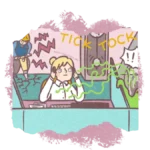
A stimulus (plural: stimuli) refers to any physical or sensory input from the environment that elicits a response or reaction from someone. It can be any sensory information, such as sound, light, touch, taste, or smell, that triggers a biological or behavioural response. Stimuli can range from simple to complex and vary in intensity and duration. They play a crucial role in sensory processing, perception, and learning, providing the necessary information for people to interact with and adapt to their surroundings.

What counts as a stimulus?

A stimulus is any change or event in the environment (internal or external) that an organism can detect and that triggers a response in the nervous system. For humans, stimuli encompass everything we perceive through our senses, including sight, hearing, touch, taste, smell, and internal sensations.

What do stimuli have to do with neurodivergence?

In neurodivergent conditions like autism, ADHD, and sensory processing disorders, the brain often processes stimuli differently than in neurotypical individuals. These differences can include being overly sensitive to certain stimuli (hypersensitivity), under-responsive to others (hyposensitivity), or having difficulty filtering out irrelevant stimuli (habituation).

The brain may struggle with sensory integration—combining information from multiple senses—or may process certain types of stimuli with unusual intensity or focus.

These differences in stimulus processing contribute to many characteristic presentations and experiences of neurodivergent individuals, including sensory seeking or avoidance behaviours, difficulty maintaining attention in stimulating environments, and sensory overwhelm or shutdown in response to excessive stimulation.

Related Questions

"Why do I watch the same show over and over?"

coping strategies energy self-care self-regulation
Explore answer

"I have tried traditional "self-care" activities, and they don't do anything for me. What am I doing wrong?"

coping strategies energy self-care self-regulation support
Explore answer
« Back to the index

Related Terms

synaptic pruning

Synaptic pruning is the process by which the brain refines its connections during development, removing synapses that are used less frequently while strengthening active ones. In autistic brains, this process works differently — two independent cleanup systems (the neuron's internal recycling programme and the brain's specialised immune cells) are both less aggressive, meaning significantly more connections are retained. This denser wiring contributes to many recognisable autistic experiences: sensory intensity, deep focus, rich pattern recognition, difficulty filtering, and the challenge of switching between tasks or environments.

Learn more
energy focus pain self-regulation
the mTOR pathway

The mTOR pathway is a signalling system inside every cell that regulates the balance between building new structures and recycling old ones. In autistic brains, this pathway runs hotter than typical, suppressing the cell's internal cleanup processes. Up to 58% of autism-associated genes relate to this pathway, making it a point of convergence where many different genetic routes produce similar outcomes — from differences in synaptic pruning and sensory processing to neuroinflammation and the balance between excitatory and inhibitory brain signalling.

Learn more
communication memory pain self-regulation
habituation

Habituation is a biological reaction mechanism where if a non-threatening stimuli keeps repeating, the response to it lowers over time. In neurodivergence, the brain's reduced capacity for habituation means we can't "tune out" unimportant stimuli, which leads to sensory difficulties and sensory overwhelm.

Learn more
special interests

Special interests are deeply focused areas of engagement that autistic people experience with a level of emotional investment, sustained attention, and joy that goes well beyond typical hobbies. Clinically categorised under restricted repetitive behaviours, special interests are one of the defining characteristics of autism — and for most autistic adults, they are a primary source of motivation, regulation, identity, and connection. Between 75% and 95% of autistic people have at least one special interest, and 82% have more than one.

Learn more
communication interests joy self-regulation
restricted repetitive behaviours (RRBs)

Restricted Repetitive Behaviours (RRBs) is the clinical term for a broad group of autistic traits including stimming, echolalia, routines, persistent interests, and sensory sensitivities. Despite the pathologising name, these patterns serve real purposes — self-regulation, cognitive energy conservation, and genuine enjoyment. They are how an autistic nervous system manages a world that doesn't come with enough predictability built in.

Learn more
joy self-regulation stress
night terrors

Night terrors are episodes of intense fear during sleep that involve screaming, physical movement, and autonomic arousal (racing heart, rapid breathing, sweating). Unlike nightmares, they occur during non-REM sleep with no memory of the event afterwards. Night terrors affect both children and adults, with higher prevalence in neurodivergent populations, particularly those with ADHD. They're triggered by sleep disruption, stress, hormonal changes, and sometimes medication, reflecting both neurological and environmental factors.

Learn more
energy periods sleep
Previous Post:hyposensitivity
Next Post:sensory-seeking

About the Author

  • Livia Farkas

    Livia Farkas is an adult education specialist with a joy-centred approach and a sharp sense for simplifying complex ideas using silly visual metaphors.

    Since 2008, she's written 870+ articles, developed 294 distinct techniques, and co-created 8 online courses with Adam—with 5,302 alumni learning neurodivergent-friendly approaches to time management, goal setting, self-care, and small business management.

    Her life goal is to be a walking permission slip for neurodivergent adults.

    View all posts

Free Resources for Neurodivergent Adults

Get our research-backed, experience-validated strategies & guides for a neurodivergent work & life that you can adapt to what success looks like to you.

Create a free account to get your goodies!

Is the button not working? No worries!
Sometimes ad-blocks stop all pop-ups, even if they are not ads.
This might be the case if nothing happens when you click the button.
Here’s another, non-pop-up way to sign up, please try if this works!

By signing up you allow us to send you Weirdly Successful’s newsletter with practical tips, strategies, and optional training material.
You can unsubscribe any time. Our Privacy Policy makes for a great summer reading!

Weirdly Successful is a 100% neurodivergent-run non-profit, developing strategies & frameworks for neurodivergent adults.

  • E-mail
  • Instagram
  • Mastodon
  • Tumblr
  • Pinterest

DISCLAIMER: All content on this website is for informational purposes only, and does not substitute for medical advice. For medical advice, diagnosis or treatment, consult a medical professional or healthcare provider.

While we strive to represent up-to-date and scientifically accurate information, our authors are not medical professionals unless where specifically noted. All opinions are the authors’ own.

Weirdly Successful’s authors and collaborators are not liable for risks or issues
associated with using or acting upon the information on our site.

All original content Copyright © 2026 · Weirdly Successful · All Rights Reserved.

Privacy Policy