• Skip to main content
  • Skip to header right navigation
  • Skip to site footer
Weirdly Successful

Weirdly Successful

Dedicated to helping you understand, navigate and enjoy your weird & wonderful neurodivergent life.

  • About Us
    • The team
    • The mission
    • What we do
    • Events
  • Learn
    • Understanding Neurodivergence
    • Diagnosis & Assessment
    • Productivity & Planning
    • Sensory & Body
    • Emotions & Regulation
    • Health & Wellbeing
    • Work & Career
  • Free Resources
    • Latest Articles
    • Neurodivergent Glossary
      • My Glossary
    • Questions & Answers
    • Resource Library
  • Contact Us
    • Send a message
    • Book a Curiosity Call
  • LOGIN

“I didn’t get my ADHD diagnosis. Now what?”

support
by
Weirdly Successful
Weirdly Successful (author)  

First published: 17 June, 2026 | Last edited: 17 June, 2026 |🕒 Reading Time: 3 minutes | 🔗
Login / Register to save article for later

You looked into ADHD because something in your experience raised questions. Maybe you’d been struggling with focus, organisation, or emotional regulation for years and wanted to understand why.

Table of Contents[Hide][Show]
  • Your journey doesn’t stop here
  • What your result means
  • What you can do now+−
    • 1. Find language for what you’re experiencing
    • 2. Try strategies that work for brains like yours
    • 3. Keep exploring

Your journey doesn’t stop here

Seeking assessment already tells you something important: you noticed patterns in your life that needed explaining. That noticing doesn’t disappear because the assessment didn’t confirm ADHD for now.

Getting to know your own neurology, finding language for how your brain works, and building strategies that fit you are still available to you.

Self-compassion and self-understanding are not reserved for the officially diagnosed.

What your result means

Your ADHD assessment compared how your experiences came across in your sessions against the clinical criteria for ADHD. That’s it.

Assessments work with what’s available on the day. The assessor builds a picture from your answers, the examples you were able to recall, and how your experiences translated into the clinical framework, and whether your presentation didn’t meet the diagnostic threshold.

Often, that picture is clear. And while your assessment result is accurate, it also might not be the full picture. Because sometimes long-term coping strategies, masking, or difficulty pinpointing the right examples can make someone’s presentation less defined than the lived experience behind it. That’s a limitation of any single assessment, and it’s the reason clinical pathways allow for reassessment if your circumstances or understanding change over time.

What you can do now

There’s a practical side to all of this. The more you learn about yourself, the clearer the picture becomes. If you do revisit a clinical conversation in future, you’ll bring a richer and more detailed understanding of your own experience to it.

1. Find language for what you’re experiencing
sensory overwhelm

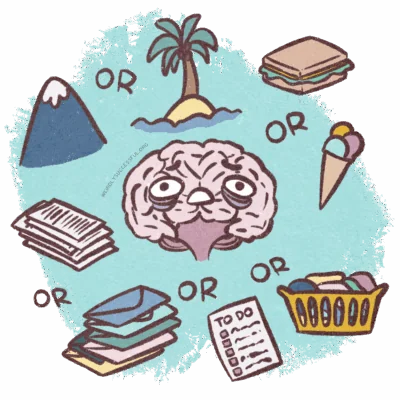
decision fatigue

masking

Sometimes the most useful thing is having a word for something you’ve always felt but never been able to name. These are experiences that cut across conditions and don’t require a diagnosis to be relevant to your life:

  • Sensory overwhelm: when environments become too much to process
  • Cognitive load: why everyday tasks can feel harder than they “should”
  • Emotional dysregulation: when your emotional responses feel bigger than the situation seems to warrant
  • Inertia: being unable to start or stop something despite wanting to
  • Decision fatigue: the wearing-down effect of too many choices
  • Masking: the effort of hiding how you naturally function, often built up over years without realising

2. Try strategies that work for brains like yours

deep pressure

stimming

decompressing

If a strategy helps you, it helps you.

You don’t need a diagnosis to use it. These are practical starting points:

  • Neurodivergent adaptations: an overview of how to build adjustments that fit you
  • Body doubling: doing tasks alongside someone else to make starting easier
  • Deep pressure: why firm, steady pressure helps some nervous systems settle
  • Decompressing: how to recover after demanding days
  • Fidgeting and stimming: movement and sensory input as regulation tools
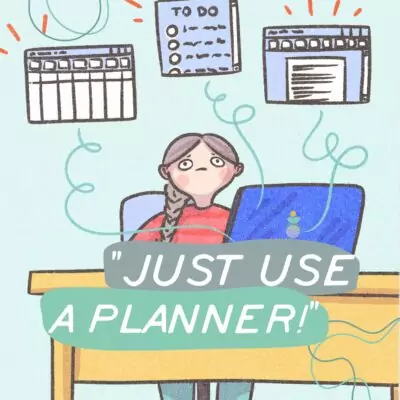
ADHD Planners: Bad advice, myths, solutions and best choices

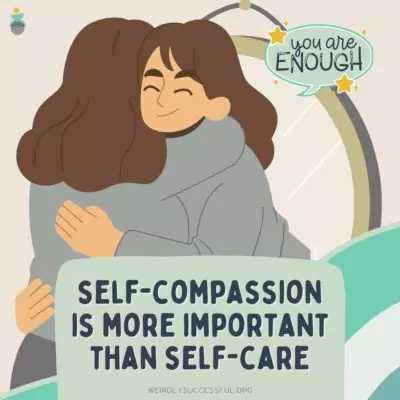
Why self-compassion is more important than self-care

Make Your Life Neurodivergent-friendly with the Adaptation Explorer Workbook

We’ve also written some practical guides you might find useful:

  • Self-care methods for neurodivergent people: why standard self-care advice often doesn’t work, and what to try instead
  • Which planner to use: finding a planning system that works with your brain rather than against it
  • The adaptation workbook: a hands-on resource for identifying and building your own accommodations

3. Keep exploring

Neurodivergence is a broad landscape, and ADHD is just one part of it. Traits often overlap across conditions, and many people find that their experiences connect to more than one area. Exploring what resonates is part of the process, and it’s something you can do at your own pace.

About Weirdly Successful

Weirdly Successful is a neurodivergent-led organisation supporting neurodivergent adults before, during, and after diagnosis. Our resources are designed for anyone exploring how their brain works, whether or not they have a formal diagnosis.

You can explore our glossary of neurodivergent experiences, join our community, or get in touch if you’d like to talk through what comes next.

« Back to the index

Related Questions

“Can supplements help with ADHD?”

Yes, and no. Whether supplements can help with your ADHD depends on where the support need is for you when it comes to your dopamine system.

food
Explore answer

“How many people are neurodivergent?”

Around 15–20% of the population is neurodivergent, which is roughly 1 out of 5 — whether they know it or not.

society
Explore answer

“Why do I do better with a routine?”

Because routine is architecture you can rely on when everything else is wobbly or up in the air. When you do the same things in the same order, your brain doesn't have to build the day from scratch. The route is known, the sequence is mapped, all the decisions have already been made, and you are good to go. This frees up precious cognitive resources for the things that actually need your attention.

energy focus motivation self-regulation
Explore answer

Related Glossary Terms

intolerance of uncertainty

Intolerance of uncertainty (IU) describes the degree to which a nervous system needs predictability in order to function — not as a preference, but as a genuine operational requirement. When outcomes are unknown or plans unconfirmed, a high-IU nervous system tends to generate contingencies: running through variables, gathering information in advance, and finding it difficult to settle until enough is known. For many autistic and ADHD adults, IU runs at a higher baseline than in the general population, and shows up in everyday experiences like needing to know the plan before you can be present, finding plan changes disproportionately disruptive, or preparing carefully for situations in order to free up bandwidth to actually enjoy them. It's not about rigidity or control — it's a nervous system requesting the information it needs to work properly.

communication self-regulation stress
Learn more

decompressing

Decompressing refers to engaging in activities or behaviours that allow a person to relax, unwind, and alleviate stress or sensory overload. This term is particularly significant in the neurodivergent community as we often experience heightened sensitivity to environmental stimuli, leading to increased stress and anxiety levels. Making sure to have time to decompress after especially taxing events is an essential part of self-care.

self-care self-regulation sensory
Learn more

ADHD tax

ADHD tax is a casual term used to describe the additional costs, both tangible and intangible, that ADHD individuals often face due to their neurodivergence, especially struggles due to executive dysfunction.

community term finances slang
Learn more

double empathy

The double empathy problem is a concept in neurodiversity studies that suggests a mutual misunderstanding between neurodivergent and neurotypical individuals.

communication emotions prejudice society
Learn more

Previous Post:stimulant medication
Next Post:“Do I have to tell people about my diagnosis?”

About the Author

  • Weirdly Successful

    Weirdly Successful

    A 100% neurodivergent team — Adam Dobay, Livia Farkas and Nora Selmeczi — bringing together lived experience, adult education expertise, clinical training and NHS co-production to create friendly, science-backed resources that help neurodivergent adults figure out what actually works for them

    View all posts

Free Resources for Neurodivergent Adults

Get our research-backed, experience-validated strategies & guides for a neurodivergent work & life that you can adapt to what success looks like to you.

Create a free account to get your goodies!

Is the button not working? No worries!
Sometimes ad-blocks stop all pop-ups, even if they are not ads.
This might be the case if nothing happens when you click the button.
Here’s another, non-pop-up way to sign up, please try if this works!

By signing up you allow us to send you Weirdly Successful’s newsletter with practical tips, strategies, and optional training material.
You can unsubscribe any time. Our Privacy Policy makes for a great summer reading!

Weirdly Successful is a 100% neurodivergent-run non-profit, developing strategies & frameworks for neurodivergent adults.

  • E-mail
  • Instagram
  • Mastodon
  • Tumblr
  • Pinterest

DISCLAIMER: All content on this website is for informational purposes only, and does not substitute for medical advice. For medical advice, diagnosis or treatment, consult a medical professional or healthcare provider.

While we strive to represent up-to-date and scientifically accurate information, our authors are not medical professionals unless where specifically noted. All opinions are the authors’ own.

Weirdly Successful’s authors and collaborators are not liable for risks or issues
associated with using or acting upon the information on our site.

All original content Copyright © 2026 · Weirdly Successful · All Rights Reserved.

Privacy Policy