
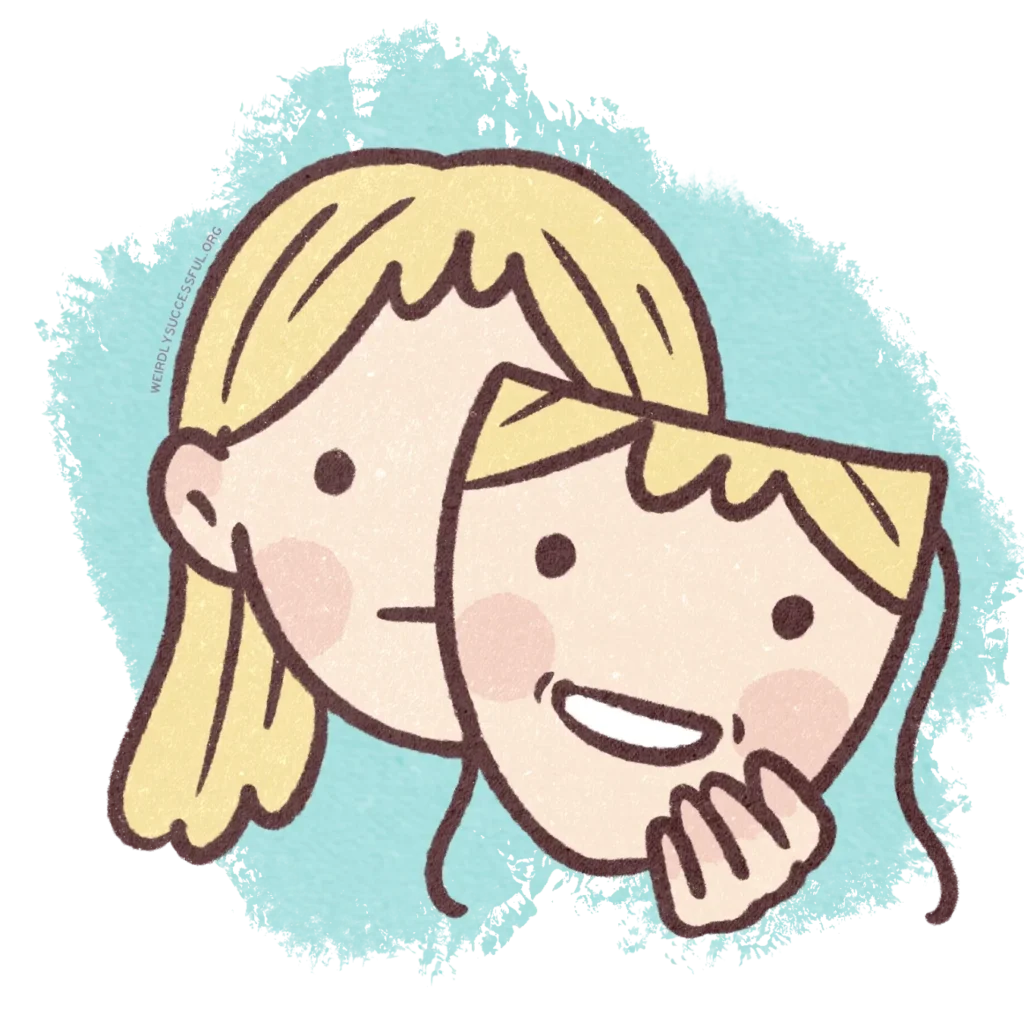
Masking is a partly unconscious effort to hide or suppress the manifestations of your neurodivergence. It is an exhausting process that many of us do to “fit in” more. Many people start to mask to avoid abuse, discrimination, bullying, harm and ableism.
Prolonged masking is very exhausting and takes a lot of effort, and can lead to autistic burnout.
Unmasking refers to a conscious process of stopping your masking and allowing yourself to stim, for example.
Why do neurodivergent people mask?
Being treated as ‘less than’ can be very exhausting. When every interaction feels like an interrogation of one’s abilities and agency, even one’s personhood, asking for help can feel like a struggle.
There comes a point when instead of opting to explain one’s difficulties for the hundredth time or enduring invasive, ignorant or offensive assumptions (sometimes concealed as ‘jokes’ or ‘banter’), it is easier to not enter these situations in the first place to avoid exposure to abuse.
Sharing personal information about a condition and disclosing a difficulty or a diagnosis can be a really vulnerable situation, and when one gets hurt over and over again for allowing this vulnerability to the surface, it can feel disheartening and impossible to keep on trying without proper support and coping strategies.
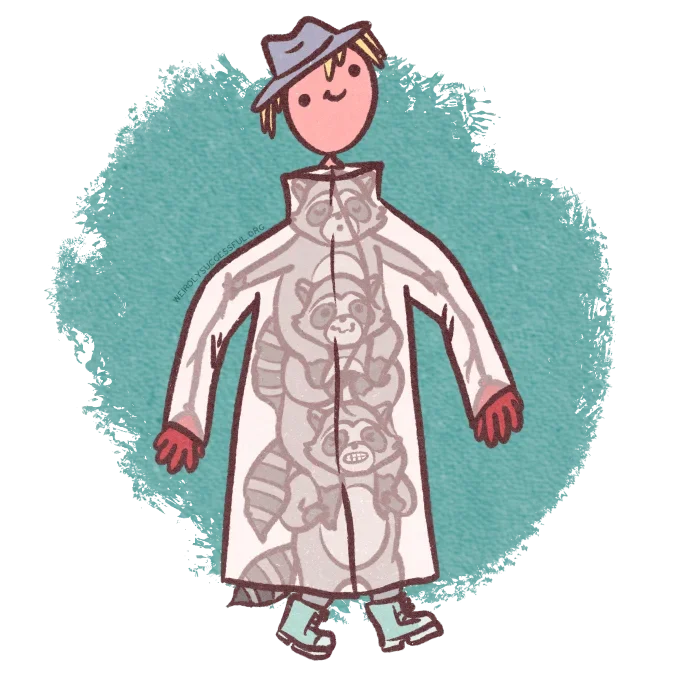
For many neurodivergent adults, masking is at least partly driven by intolerance of uncertainty in social situations — if you can’t predict how people will react to the unmasked version of you, controlling the performance feels like the only way to manage the risk.
Masking requires enormous and sustained cognitive flexibility — constantly reading the room, adapting your behaviour, switching between your internal experience and your external performance — which is part of why it’s so profoundly exhausting for people whose thinking naturally tends toward consistency and depth rather than rapid social code-switching.





 executive dysfunction