
“Don’t people grow out of ADHD?”
People don't grow out of ADHD. Symptoms change from external hyperactivity to internal restlessness, and life transitions often unmask previously hidden ADHD.


People don't grow out of ADHD. Symptoms change from external hyperactivity to internal restlessness, and life transitions often unmask previously hidden ADHD.

Girls with ADHD are real and underdiagnosed. Population studies show similar rates to boys, but referral bias and different presentations keep girls invisible. ADHD doesn't discriminate by gender, but diagnostic bias does—people socialized as girls face 4+ year delays in diagnosis.

While ADHD correlates with a higher number of adverse childhood experiences, hundreds of studies show that traumatic experiences are not a causative factor - if anything, it’s the other way around.

You won't lose yourself - in fact, most people find the opposite happens. As you gain clarity and self-compassion, drop the shame around your struggles, and learn to unmask more, you might discover you're more yourself than ever before. You'll finally get to meet the version of yourself that isn't constantly performing, compensating, or apologising for existing.

If you're worried about this, you're already not that person. Asking for accommodations (like quiet spaces, reminders, breaks) is self-care and self-advocacy. The difference between advocating for your needs and being manipulative comes down to respect: are you communicating your limits while taking responsibility, or are you demanding others tolerate harmful behaviour?

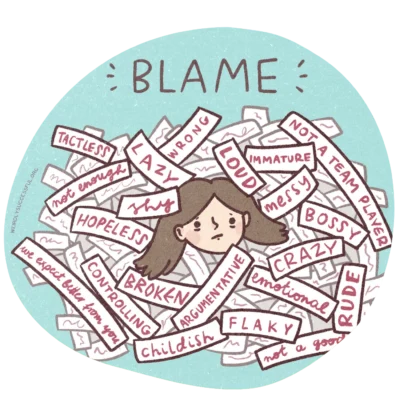
Whether you like it or not, you already have labels — lazy, scatterbrain, weird, messy — given to you by others. You have probably internalised many of them over the decades, too. The difference with a diagnosis is that this label is one you choose for yourself based on understanding, and not a mean, untrue one imposed on you out of frustration or judgment.

You’ve developed coping strategies and made it work so far. Hooray! But what’s working today might not work tomorrow — especially when life throws big changes at you like hormonal shifts, job changes, or major life transitions. A diagnosis can give you a baseline understanding of your brain so you can adapt when things change, rather than having to reverse-engineer everything from scratch during a crisis.
Good news: a neurodivergent diagnosis isn't about fixing you, because you're not broken. What it actually does is give you a framework to understand how your brain works and what you need - so you can finally stop forcing neurotypical solutions on yourself.

"How did no one ever notice??"
The amount of times this sentence is heard in our house, along with the dramatically exaggerated waving of arms, would definitely qualify for a sitcom catchphrase.
You see, reader, I'm what they call "late-diagnosed".
"Late" is relative, of course. For ADHD, "late diagnosis" can mean anything from above 60 for those above 60 to 25 for those who are 25. For Autism, some guidelines even go down to 12 as "late".
My own ADHD stamp (with the bonus traits from a handful of other neurodivergent conditions) came at 37, with the fancy PDF attachment. We already knew, we just didn't know know.
Once confirmed, though, not one week goes by when I don't do, say or remember something that so clearly reveals a neurodivergent trait that's always been there.
So how did no one ever notice?