
• Skip to main content
  • Skip to header right navigation
  • Skip to site footer
Weirdly Successful

Weirdly Successful

Dedicated to helping you understand, navigate and enjoy your weird & wonderful neurodivergent life.

  • About Us
    • The team
    • The mission
    • What we do
    • Events
  • Learn
    • Understanding Neurodivergence
    • Diagnosis & Assessment
    • Productivity & Planning
    • Sensory & Body
    • Emotions & Regulation
    • Health & Wellbeing
    • Work & Career
  • Free Resources
    • Latest Articles
    • Neurodivergent Glossary
      • My Glossary
    • Questions & Answers
    • Resource Library
  • Contact Us
    • Send a message
    • Book a Curiosity Call
  • LOGIN

PMDD

energy pain periods
by
Livia Farkas (author)  

First published: 28 June, 2023 | Last edited: 12 January, 2026 |🕒 Reading Time: 2 minutes | 🔗
Login / Register to save article for later

PMDD is Premenstrual Disphoric Disorder, and refers to a severe, disabling form of PMS.

What happens during PMDD?

In the last phase of the menstrual cycle before bleeding, the individual can experience

  • depression-like symptoms
  • disruptive thoughts and worse mental health
  • hopelessness, worse self-image than usual, feeling like a failure
  • irritable mood, heightened emotional impulsivity: you get upset or angry very easily
  • executive dysfunction: it is harder to start of finish tasks, remember information, plan or stick to schedules
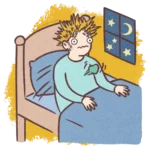
  • sleep related problems: insomnia or hypersomnia, nightmares or sleep terrors,
  • breast pain
  • and migraines.

These symptoms usually appear 7-10 days before the period and go away almost instantly when the bleeding starts.

ADHD and periods

PMDD is highly co-occurring with ADHD. 1 In this phase of the menstrual cycle, estrogen levels drop, and since estrogen is connected to dopamine, dopamine also plummets. This is why ADHD challenges seem to be more frequent or severe during this period.

Getting help for PMDD

Many doctors don’t take PMDD seriously and people suffering from PMDD often think they are alone with this problem or it is normal to suffer this much before their period.

The treatment of PMDD can include taking SSRIs, and creating accommodations for those 7-10 days.

Often just knowing you are not alone and you are not just imagining your symptoms helps a lot. Finding community among folks who also go through PMDD can be very empowering.

However, PMDD can also be very dangerous and life-threatening when it severely affects the individual’s mental health. For this reason, sometimes stopping periods altogether with contraceptives can be beneficial, and in very severe cases as a very last resort, hysterectomy can also save lives.

If you notice signs of PMDD in yourself, please consult with your doctor and if they dismiss you, go for a second or third opinion.

« Back to the index


References
1↑ Prevalence of hormone-related mood disorder symptoms in women with ADHD Source

Related Questions

“Can verbal shutdown happen with ADHD?”

ADHD speech difficulties are usually about effort and disorganisation rather than a complete loss of access. You might notice more grammatical errors, mispronounced words, sentences that lose their thread halfway through, or long pauses while you search for a word you know perfectly well.

communication language voice
Explore answer

“Why do I do better with a routine?”

Because routine is architecture you can rely on when everything else is wobbly or up in the air. When you do the same things in the same order, your brain doesn't have to build the day from scratch. The route is known, the sequence is mapped, all the decisions have already been made, and you are good to go. This frees up precious cognitive resources for the things that actually need your attention.

focus motivation self-regulation support
Explore answer

“Why do I watch the same show over and over?”

Because your nervous system is doing something smart, so good for you! 🙂 When you rewatch a familiar show, your brain isn't processing anything new — no plot twists to manage, no unfamiliar characters to track, no sudden shifts in tone to adjust to.

coping strategies self-care self-regulation sensory
Explore answer

Related Glossary Terms

synaptic pruning

Synaptic pruning is the process by which the brain refines its connections during development, removing synapses that are used less frequently while strengthening active ones. In autistic brains, this process works differently — two independent cleanup systems (the neuron's internal recycling programme and the brain's specialised immune cells) are both less aggressive, meaning significantly more connections are retained. This denser wiring contributes to many recognisable autistic experiences: sensory intensity, deep focus, rich pattern recognition, difficulty filtering, and the challenge of switching between tasks or environments.

focus neurobiology self-regulation sensory
Learn more

night terrors

Night terrors are episodes of intense fear during sleep that involve screaming, physical movement, and autonomic arousal (racing heart, rapid breathing, sweating). Unlike nightmares, they occur during non-REM sleep with no memory of the event afterwards. Night terrors affect both children and adults, with higher prevalence in neurodivergent populations, particularly those with ADHD. They're triggered by sleep disruption, stress, hormonal changes, and sometimes medication, reflecting both neurological and environmental factors.

sensory sleep
Learn more

autistic burnout

Autistic burnout refers to a state of physical, mental, and emotional exhaustion experienced by autistic people. It is a result of prolonged exposure to overwhelming sensory, social, and cognitive demands, often in an environment that does not accommodate their needs.

focus motivation
Learn more

rigid thinking (cognitive inflexibility)

Cognitive inflexibility, also erroneously referred to as rigid thinking, is a diagnostic characteristic of autism that describes difficulty shifting between tasks, perspectives, or plans. The label captures how the trait looks from outside — but the internal experience is better understood through monotropism: a processing style that goes deep rather than wide. The depth that makes sustained focus, thoroughness, and reliability possible is the same depth that makes switching costly. The difficulty and the strength are the same mechanism.

communication emotions focus motivation thoughts
Learn more

Related Articles

How To Make Your Life Neurodivergent-friendly

You've tried all the ADHD tips online, but nothing seems to stick. That's because neurodivergent brains don't come with universal solutions—what helps one person might not work for you at all. Here's how to discover your specific adaptations and create a life that actually works for YOUR brain. Explore your needs, what environments you work best in, what overwhelms you, and what helps you regulate.

communication self-care support
Read article

I Wasn’t ‘Just A Bit Stressed Out’

Exploring the impact of internalised ableism made me re-evaluate my misinterpreted autistic and ADHD traits.

self-care sensory society support
Read article

Previous Post:unmasking
Next Post:Specific Learning Difficulties

About the Author

  • Livia Farkas

    Livia Farkas is an adult education specialist with a joy-centred approach and a sharp sense for simplifying complex ideas using silly visual metaphors.

    Since 2008, she's written 870+ articles, developed 294 distinct techniques, and co-created 8 online courses with Adam—with 5,302 alumni learning neurodivergent-friendly approaches to time management, goal setting, self-care, and small business management.

    Her life goal is to be a walking permission slip for neurodivergent adults.

    View all posts

Free Resources for Neurodivergent Adults

Get our research-backed, experience-validated strategies & guides for a neurodivergent work & life that you can adapt to what success looks like to you.

Create a free account to get your goodies!

Is the button not working? No worries!
Sometimes ad-blocks stop all pop-ups, even if they are not ads.
This might be the case if nothing happens when you click the button.
Here’s another, non-pop-up way to sign up, please try if this works!

By signing up you allow us to send you Weirdly Successful’s newsletter with practical tips, strategies, and optional training material.
You can unsubscribe any time. Our Privacy Policy makes for a great summer reading!

Weirdly Successful is a 100% neurodivergent-run non-profit, developing strategies & frameworks for neurodivergent adults.

  • E-mail
  • Instagram
  • Mastodon
  • Tumblr
  • Pinterest

DISCLAIMER: All content on this website is for informational purposes only, and does not substitute for medical advice. For medical advice, diagnosis or treatment, consult a medical professional or healthcare provider.

While we strive to represent up-to-date and scientifically accurate information, our authors are not medical professionals unless where specifically noted. All opinions are the authors’ own.

Weirdly Successful’s authors and collaborators are not liable for risks or issues
associated with using or acting upon the information on our site.

All original content Copyright © 2026 · Weirdly Successful · All Rights Reserved.

Privacy Policy