• Skip to main content
  • Skip to header right navigation
  • Skip to site footer
Weirdly Successful

Weirdly Successful

Dedicated to helping you understand, navigate and enjoy your weird & wonderful neurodivergent life.

  • About Us
    • The team
    • The mission
    • What we do
    • Events
  • Learn
    • Understanding Neurodivergence
    • Diagnosis & Assessment
    • Productivity & Planning
    • Sensory & Body
    • Emotions & Regulation
    • Health & Wellbeing
    • Work & Career
  • Free Resources
    • Latest Articles
    • Neurodivergent Glossary
      • My Glossary
    • Questions & Answers
    • Resource Library
  • Contact Us
    • Send a message
    • Book a Curiosity Call
  • Log in

Livia Farkas

Neurodivergent Adaptation Educator

In her free time, she enjoys stickers & planners, crochet & roller skates, and running around with her pet bunny Rumi.

Building Weirdly Successful’s Knowledge Systems

Livia is the architect behind Weirdly Successful’s knowledge infrastructure — creating the systems that help late-identified neurodivergent adults make sense of their experiences and find language for what they’ve always felt.

She created The Neurodivergent Glossary, an ever-growing encyclopaedia of neurodivergence-related terms designed to help people find answers using everyday words for their experiences—not medical jargon they haven’t yet learned. She also designed the content architecture that powers the entire website: a system that organises content by what someone is experiencing (focus, hearing, time), where they are in their journey (exploring, seeking diagnosis, recently diagnosed), and what they need to know (definitions, validation, practical strategies).

Currently, Livia is building the Weirdly Successful Learning Community: a custom-built peer support platform designed from the ground up for neurodivergent brains. Every element, from the onboarding process to the reaction buttons, has been designed to balance ADHD and Autistic accessibility needs.

Specialist Subjects

  • Neurodivergent adaptations for life and work · Dismantling harmful self-beliefs
  • Promoting self-compassion
  • Creating a life without the hustle

Background: 15 Years in Adult Education

Livia’s neurodivergent-focused work builds on 15 years as a productivity and lifestyle educator in Hungary, where she developed the frameworks, techniques, and teaching approach she now adapts for English-speaking neurodivergent audiences.

Book

That Traffic Light’s Not Getting Any Greener! (XXI. Század Kiadó, 2013; ISBN: 9786155373022) — National bestseller in Hungary, shortlisted for the Libri Golden Book Awards.

Publications

Éva Magazin (2014–2020), HVG Psychology (2019), Glamour (2019), Forbes Hungary (2017), Marie Claire Hungary (2013), Elle Hungary (2013), Cosmopolitan Hungary (2013)

TV & Radio

Livia has appeared as a productivity and lifestyle expert on Hungarian national television, including recurring segments on RTL Klub’s morning programme and appearances on TV2 and Duna World. She has been interviewed on Kossuth Rádió (Hungarian public radio), Klubrádió, and Jazzy.

Talks & Appearances

Livia has spoken at universities including the University of Debrecen, ELTE, Corvinus University, and the Balassi Institute; at professional conferences including the Mfor Marketing Conference, Digital Divas Conference, and Evolution Social Media Conference; and at a Google Ground roundtable on women in business. Her 2013 book tour included venues across Hungary and a reader meetup in London.

Awards

  • HVG GoldenBlog, Audience Award for urban:eve blog (2011, won)
  • Cosmopolitan Digital Divas, “Best Blog Design” (2012, won)
  • Glamour Women of The Year Hungary, “Blogger of the Year” (2014, nominated)
Latest from Livia

Content type: Glossary Entry📖Glossary Entry

neurodivergent adaptations

Adaptations or coping mechanisms are adjustments you make for yourself or made for you to create a safe and comfortable environment for you to exist in.

Read moreneurodivergent adaptations
Content type: Glossary Entry📖Glossary Entry

AuDHD

AuDHD is an unofficial term for co-occurring Autism and ADHD - it is used when someone has both conditions.

Read moreAuDHD
Content type: Glossary Entry📖Glossary Entry

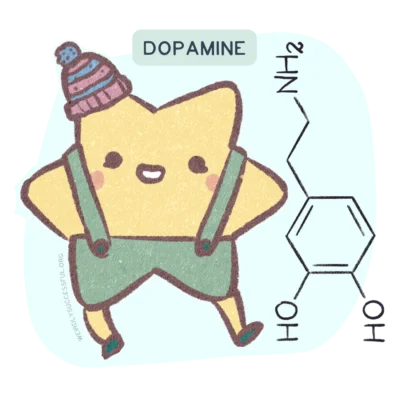
dopamine

Dopamine is a neurotransmitter involved in many different functions, including movement, motivation, reward, and pleasure. It is one of the most important neurotransmitters you have to get to know if you want to understand ADHD better.

Read moredopamine
Content type: Glossary Entry📖Glossary Entry

emotional dysregulation

Emotional dysregulation is the inability to regulate the intensity and quality of emotions in order to generate an appropriate emotional response and return to an emotional baseline.

When someone has difficulty regulating their emotions, they are easily overstimulated and they can get upset or overwhelmed easily. On the other hand, they can also have trouble with calming down, relaxing, or …

Read moreemotional dysregulation
Content type: Glossary Entry📖Glossary Entry

stimulus

A stimulus (plural: stimuli) refers to any physical or sensory input from the environment that elicits a response or reaction from someone. It can be any sensory information, such as sound, light, touch, taste, or smell, that triggers a biological or behavioural response. Stimuli can range from simple to complex and vary in intensity and …

Read morestimulus
Content type: Glossary Entry📖Glossary Entry

dyspraxia

Developmental Coordination Disorder is a neurological condition that affects motor skills and coordination. People with DCD can have trouble with balancing, or tasks that require fine motor skills like tying shoelaces, holding pens or cutlery.

Read moredyspraxia
Content type: Glossary Entry📖Glossary Entry

inattentive

Inattentive traits are a trait cluster that represents one of the ADHD subtypes, also known as the distracted type. Inattentive traits include daydreaming, forgetfulness (not remembering the question while answering, forgetting things at home, following instructions with multiple sub-tasks), and difficulty focusing on a task that’s not engaging enough.

Read moreinattentive
Content type: Glossary Entry📖Glossary Entry

ADHD

ADHD (Attention Deficit Hyperactivity Disorder) is a lifelong, hereditary neurological condition. A person with ADHD can be inattentive, hyperactive and impulsive in their internal mental processes as well as their outward presentation.

ADD (Attention Deficit Disorder) is the previous name of the condition and officially hasn't been in use since 1987.

Read moreADHD
Content type: Glossary Entry📖Glossary Entry

PMDD

PMDD is Premenstrual Disphoric Disorder, and refers to a severe, disabling form of PMS.

Read morePMDD
Content type: Glossary Entry📖Glossary Entry

masking

Masking is a partly unconscious effort to hide or suppress the manifestations of your neurodivergence. It is an exhausting process that many of us do to "fit in" more. Many people start to mask to avoid abuse, discrimination, bullying, harm and ableism.

Read moremasking
Content type: Glossary Entry📖Glossary Entry

executive dysfunction

Executive functions are essential, they help us make plans, stay organized, pay attention, and keep our emotions in check. It plays a big role in making decisions and adapting to new situations.

Executive dysfunction can happen when these processes have a difference or impairment that affects everyday life.

Read moreexecutive dysfunction
Content type: Glossary Entry📖Glossary Entry

neurodiversity

The word neurodiversity is used to describe a diverse group of individuals with different neurotypes. It includes all humans, though colloquially it is often used for a group of neurodivergent people.

Read moreneurodiversity
  • Previous
  • Page 1
  • Interim pages omitted …
  • Page 7
  • Page 8
  • Page 9
  • Page 10
  • Next

Free Resources for Neurodivergent Adults

Get our research-backed, experience-validated strategies & guides for a neurodivergent work & life that you can adapt to what success looks like to you.

Create a free account to get your goodies!

Is the button not working? No worries!
Sometimes ad-blocks stop all pop-ups, even if they are not ads.
This might be the case if nothing happens when you click the button.
Here’s another, non-pop-up way to sign up, please try if this works!

By signing up you allow us to send you Weirdly Successful’s newsletter with practical tips, strategies, and optional training material.
You can unsubscribe any time. Our Privacy Policy makes for a great summer reading!

Weirdly Successful is a 100% neurodivergent-run non-profit, developing strategies & frameworks for neurodivergent adults.

  • E-mail
  • Instagram
  • Mastodon
  • Tumblr
  • Pinterest

DISCLAIMER: All content on this website is for informational purposes only, and does not substitute for medical advice. For medical advice, diagnosis or treatment, consult a medical professional or healthcare provider.

While we strive to represent up-to-date and scientifically accurate information, our authors are not medical professionals unless where specifically noted. All opinions are the authors’ own.

Weirdly Successful’s authors and collaborators are not liable for risks or issues
associated with using or acting upon the information on our site.

All original content Copyright © 2026 · Weirdly Successful · All Rights Reserved.

Privacy Policy