• Skip to main content
  • Skip to header right navigation
  • Skip to site footer
Weirdly Successful

Weirdly Successful

Dedicated to helping you understand, navigate and enjoy your weird & wonderful neurodivergent life.

  • About Us
    • The team
    • The mission
    • What we do
    • Events
  • Learn
    • Understanding Neurodivergence
    • Diagnosis & Assessment
    • Productivity & Planning
    • Sensory & Body
    • Emotions & Regulation
    • Health & Wellbeing
    • Work & Career
  • Free Resources
    • Latest Articles
    • Neurodivergent Glossary
    • Resource Library
  • Contact Us
    • Send a message
    • Book a Curiosity Call

support

“I don’t want to become my label and use my neurodivergence as an excuse”

diagnosis identity self-image support

If you're worried about this, you're already not that person. Asking for accommodations (like quiet spaces, reminders, breaks) is self-care and self-advocacy. The difference between advocating for your needs and being manipulative comes down to respect: are you communicating your limits while taking responsibility, or are you demanding others tolerate harmful behaviour?

Read more“I don’t want to become my label and use my neurodivergence as an excuse”

“What can a neurodivergent diagnosis give me if I got this far on my own?”

coping strategies diagnosis support

You’ve developed coping strategies and made it work so far. Hooray! But what’s working today might not work tomorrow — especially when life throws big changes at you like hormonal shifts, job changes, or major life transitions. A diagnosis can give you a baseline understanding of your brain so you can adapt when things change, rather than having to reverse-engineer everything from scratch during a crisis.

Read more“What can a neurodivergent diagnosis give me if I got this far on my own?”

I have tried traditional “self-care” activities, and they don’t do anything for me. What am I doing wrong?

coping strategies energy self-care sensory support

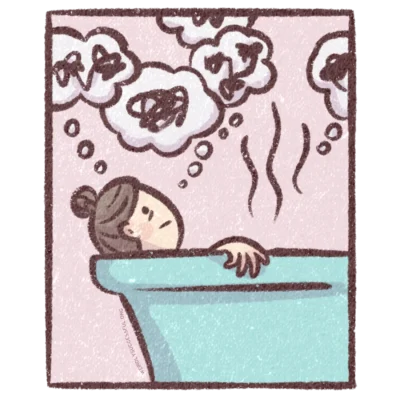
Nothing! Neurodivergent brains need more time to process, decompress, and recharge. It probably has to do with how For us neurodivergent folks, the type of rest has to match our needs. A lot of neurotypical forms of rest work against what we need. “Candle-lit bubble bath?” If you’re ADHD, an understimulating environment might force your …

Read moreI have tried traditional “self-care” activities, and they don’t do anything for me. What am I doing wrong?

I Wasn’t ‘Just A Bit Stressed Out’

self-care sensory society support

Exploring the impact of internalised ableism made me re-evaluate my misinterpreted autistic and ADHD traits.

Read moreI Wasn’t ‘Just A Bit Stressed Out’

decompressing

regulation self-care sensory support

Decompressing refers to engaging in activities or behaviours that allow a person to relax, unwind, and alleviate stress or sensory overload.

This term is particularly significant in the neurodivergent community as we often experience heightened sensitivity to environmental stimuli, leading to increased stress and anxiety levels.

Making sure to have time to decompress after especially taxing events is an essential part of self-care.

Read moredecompressing

ADHD tax

community term finances slang support

ADHD tax is a casual term used to describe the additional costs, both tangible and intangible, that ADHD individuals often face due to their neurodivergence, especially struggles due to executive dysfunction.

Read moreADHD tax

double empathy

communication emotions prejudice society support

The double empathy problem is a concept in neurodiversity studies that suggests a mutual misunderstanding between neurodivergent and neurotypical individuals.

Read moredouble empathy

deep pressure

regulation self-care sensory support touch

Deep pressure is a natural sensory need where firm, consistent pressure (like heavy blankets or tight hugs) helps tension melt away from your body. Many people naturally seek this through things like snug clothing or curling up under blankets - it's your nervous system's way of finding calm and comfort.

Read moredeep pressure

I didn’t think I was neurodivergent – until I learned what it really means

identity self-care self-confidence society support

"How did no one ever notice??"

The amount of times this sentence is heard in our house, along with the dramatically exaggerated waving of arms, would definitely qualify for a sitcom catchphrase.

You see, reader, I'm what they call "late-diagnosed".

"Late" is relative, of course. For ADHD, "late diagnosis" can mean anything from above 60 for those above 60 to 25 for those who are 25. For Autism, some guidelines even go down to 12 as "late".

My own ADHD stamp (with the bonus traits from a handful of other neurodivergent conditions) came at 37, with the fancy PDF attachment. We already knew, we just didn't know know.

Once confirmed, though, not one week goes by when I don't do, say or remember something that so clearly reveals a neurodivergent trait that's always been there.

So how did no one ever notice?

Read moreI didn’t think I was neurodivergent – until I learned what it really means

trauma-informed

medical term support

A trauma-informed approach is looking out for the needs of the individual with the effect of trauma taken into consideration.

Trauma can have a profound physical, biological, psychological and social effect on a person, and this effect cannot be discounted.

Read moretrauma-informed

curb-cut effect

society support

The curb-cut effect refers to the phenomenon that policies initially created to serve a marginalized group end up serving a much more significant portion of society, benefiting even more people than it was originally designed for.

Read morecurb-cut effect

neurodivergent adaptations

support

Adaptations or coping mechanisms are adjustments you make for yourself or made for you to create a safe and comfortable environment for you to exist in.

Read moreneurodivergent adaptations

neuroaffirming

society support

Neuroaffirming or neuro-affirmative refers to practices, approaches, or environments that recognize and affirm the neurodiversity of society and the neurodivergence of individuals.

Read moreneuroaffirming

unmasking

relationships self-care society support

Unmasking is when you slowly learn to allow your neurodivergence to present itself and you don't try to hide yourself. However, to unmask is a privilege, as you need a safe space to do it.

Read moreunmasking

body doubling

focus learning motivation support

Body doubling means doing a task or errand with someone else or in the presence of someone else so it's easier to start or follow through.

Their supportive presence helps create a safe, anchoring environment that makes it easier to start and follow through with tasks -- without pressure or judgment.

It is one of the strategies for managing focus and creating a flow for work, even if you feel lost and overwhelmed by executive dysfunction.

Read morebody doubling

co-occurring conditions

diagnosis medical term support

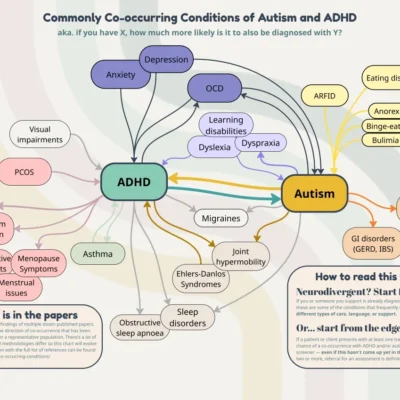
Co-occurrence means that certain neurodivergent traits and conditions naturally tend to appear together. When you're neurodivergent in one way, you're more likely to experience other forms of neurodivergence too - research shows this happens in up to 70% of cases. These patterns extend beyond just neurodevelopmental differences to include physical health and mental health experiences. Understanding co-occurrence is vital because it helps explain how different aspects of neurodivergence connect, leading to better self-understanding and more effective support. While traditional healthcare often treats conditions separately, recognizing these natural connections can transform how you advocate for your needs and access appropriate care.

Read moreco-occurring conditions

How to spot if a product for ADHD is a rip-off: look out for these 10 red flags

support

Apps, productivity systems, quizzes for ADHD types, supplements, oh my! Not everything labelled with ADHD is actually good for ADHD.
In this article, we'll show you how to tell if a product or service is just using ADHD as a buzzword for a quick cash grab.

Read moreHow to spot if a product for ADHD is a rip-off: look out for these 10 red flags

Free Resources for Neurodivergent Adults

Get our research-backed, experience-validated strategies & guides for a neurodivergent work & life that you can adapt to what success looks like to you.

Create a free account to get your goodies!

Is the button not working? No worries!
Sometimes ad-blocks stop all pop-ups, even if they are not ads.
This might be the case if nothing happens when you click the button.
Here’s another, non-pop-up way to sign up, please try if this works!

By signing up you allow us to send you Weirdly Successful’s newsletter with practical tips, strategies, and optional training material.
You can unsubscribe any time. Our Privacy Policy makes for a great summer reading!

Weirdly Successful is a 100% neurodivergent-run non-profit, developing strategies & frameworks for neurodivergent adults.

  • E-mail
  • Instagram
  • Mastodon
  • Tumblr
  • Pinterest

DISCLAIMER: All content on this website is for informational purposes only, and does not substitute for medical advice. For medical advice, diagnosis or treatment, consult a medical professional or healthcare provider.

While we strive to represent up-to-date and scientifically accurate information, our authors are not medical professionals unless where specifically noted. All opinions are the authors’ own.

Weirdly Successful’s authors and collaborators are not liable for risks or issues
associated with using or acting upon the information on our site.

All original content Copyright © 2026 · Weirdly Successful · All Rights Reserved.

Privacy Policy