“Does caffeine help with ADHD?”
Caffeine acts on the same dopamine pathways as ADHD medication. So it would make sense that coffee can work as a viable stimulant, but research found it helps less than you think, and it can get worse over time.

Weirdly Successful
Dedicated to helping you understand, navigate and enjoy your weird & wonderful neurodivergent life.

Caffeine acts on the same dopamine pathways as ADHD medication. So it would make sense that coffee can work as a viable stimulant, but research found it helps less than you think, and it can get worse over time.
Cognitive inflexibility, also erroneously referred to as rigid thinking, is a diagnostic characteristic of autism that describes difficulty shifting between tasks, perspectives, or plans. The label captures how the trait looks from outside — but the internal experience is better understood through monotropism: a processing style that goes deep rather than wide. The depth that makes sustained focus, thoroughness, and reliability possible is the same depth that makes switching costly. The difficulty and the strength are the same mechanism.
Synaptic pruning is the process by which the brain refines its connections during development, removing synapses that are used less frequently while strengthening active ones. In autistic brains, this process works differently — two independent cleanup systems (the neuron's internal recycling programme and the brain's specialised immune cells) are both less aggressive, meaning significantly more connections are retained. This denser wiring contributes to many recognisable autistic experiences: sensory intensity, deep focus, rich pattern recognition, difficulty filtering, and the challenge of switching between tasks or environments.
Because routine is architecture you can rely on when everything else is wobbly or up in the air.
When you do the same things in the same order, your brain doesn't have to build the day from scratch. The route is known, the sequence is mapped, all the decisions have already been made, and you are good to go. This frees up precious cognitive resources for the things that actually need your attention.
Because your nervous system is doing something smart, so good for you! :)
When you rewatch a familiar show, your brain isn't processing anything new — no plot twists to manage, no unfamiliar characters to track, no sudden shifts in tone to adjust to.
Fidgeting is similar to stimming, but they serve different purposes. While stimming tends to function as emotional regulation (a way to manage overwhelming feelings or sensory input), fidgeting more often serves focus regulation and energy discharge. The movements might look the same from the outside, but the internal experience and function can be quite different.
Fidgeting involves small, often unconscious movements—bouncing your leg, tapping your fingers, clicking a pen, doodling, twirling your hair. These movements help regulate focus and discharge energy, particularly for people with ADHD. Fidgeting provides the sensory input your brain needs to stay alert and engaged, especially during tasks that don't provide enough stimulation on their own. It's about maintaining the right level of arousal (alertness) to concentrate or releasing restless energy when big movements aren't possible.
Fidgeting serves as an involuntary mechanism for self-regulating attention and enhancing alertness, especially during tasks perceived as cognitively demanding (hard to do) or monotonous (i.e. boring and repetitive).
People don't grow out of ADHD. Symptoms change from external hyperactivity to internal restlessness, and life transitions often unmask previously hidden ADHD.
One aspect of ADHD is difficulties in the brain's impulse self-regulation systems, which in childhood can manifest as movement that's deemed excessive, but this is neither required for ADHD nor the whole story of what hyperactivity means.
Nothing! Neurodivergent brains need more time to process, decompress, and recharge.
Night terrors are episodes of intense fear during sleep that involve screaming, physical movement, and autonomic arousal (racing heart, rapid breathing, sweating). Unlike nightmares, they occur during non-REM sleep with no memory of the event afterwards.
Night terrors affect both children and adults, with higher prevalence in neurodivergent populations, particularly those with ADHD.
They're triggered by sleep disruption, stress, hormonal changes, and sometimes medication, reflecting both neurological and environmental factors.
Inertia is the experience of being unable to start (or stop) an activity despite wanting to, a difficulty of task initiation or task paralysis. It's a common neurodivergent experience related to executive function, and not caused by laziness, procrastination or lack of motivation. Like a car without fuel, no amount of pressing the gas pedal will help when the resources needed for action aren't available.
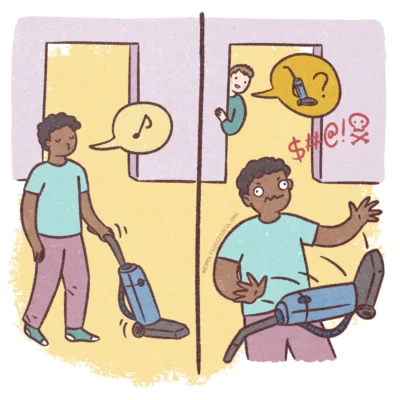
Transitioning, in the context of neurodiversity, refers to the process of moving from one state, activity, or place to another. It involves a shift in attention, focus, and cognitive resources.
For neurodivergent individuals, it may require additional time, support, and strategies to manage effectively.
Transitioning can encompass a wide range of changes, from minor daily shifts like moving from one task to another, to major life changes such as transitioning from school to work or from living at home to independent living.
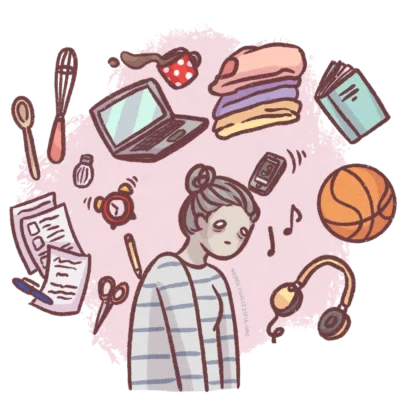
Context switching refers to the cognitive process of shifting attention between different tasks or mental states. It involves disengaging from one task and engaging in another, requiring the brain to change its focus, rules, and objectives.
This process can be mentally taxing due to the cognitive load involved in stopping one task and starting another, shifting gears to focus on the new task, and getting accustomed to the new situation with all its stimuli. Frequent context switching and jumping from task to task can lead to a decrease in productivity and efficiency.
Demand avoidance means appearing opposed to doing something when it's perceived as a demand, especially from an authority figure - even if you actually want to do the thing. While it may look like defiance or stubbornness to others, it's actually an involuntary self-preservation response triggered by threats to autonomy. This response happens automatically, not as a conscious decision to be difficult.
Autistic burnout refers to a state of physical, mental, and emotional exhaustion experienced by autistic people. It is a result of prolonged exposure to overwhelming sensory, social, and cognitive demands, often in an environment that does not accommodate their needs.
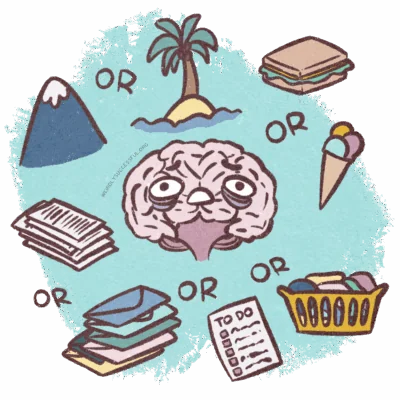
Decision fatigue refers to the deteriorating quality of decision-making after a long period of decision-making activity. It means you feel mentally exhausted from making too many choices.
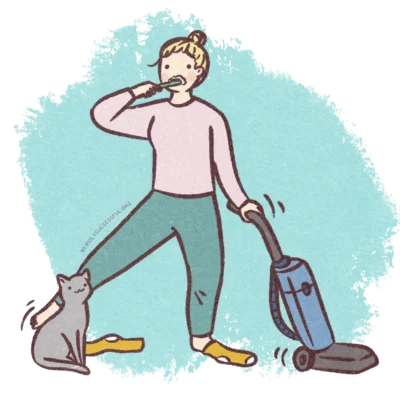
Hyperactivity means a group of traits and is one of the ADHD subtypes. Hyperactivity can present in physical and mental symptoms. Hyperactive traits include fidgeting and other sensory-seeking behaviours, interrupting others when they talk or finishing their sentences for them, impulsive actions and thrill-seeking behaviour (with a reduced sense of danger), having many ideas and blurting them out.
Inattentive traits are a trait cluster that represents one of the ADHD subtypes, also known as the distracted type. Inattentive traits include daydreaming, forgetfulness (not remembering the question while answering, forgetting things at home, following instructions with multiple sub-tasks), and difficulty focusing on a task that’s not engaging enough.
PMDD is Premenstrual Disphoric Disorder, and refers to a severe, disabling form of PMS.
Executive functions are essential, they help us make plans, stay organized, pay attention, and keep our emotions in check. It plays a big role in making decisions and adapting to new situations.
Executive dysfunction can happen when these processes have a difference or impairment that affects everyday life.