• Skip to main content
  • Skip to header right navigation
  • Skip to site footer
Weirdly Successful

Weirdly Successful

Dedicated to helping you understand, navigate and enjoy your weird & wonderful neurodivergent life.

  • About Us
    • The team
    • The mission
    • What we do
    • Events
  • Learn
    • Understanding Neurodivergence
    • Diagnosis & Assessment
    • Productivity & Planning
    • Sensory & Body
    • Emotions & Regulation
    • Health & Wellbeing
    • Work & Career
  • Free Resources
    • Latest Articles
    • Neurodivergent Glossary
      • My Glossary
    • Questions & Answers
    • Resource Library
  • Contact Us
    • Send a message
    • Book a Curiosity Call
  • LOGIN

Livia Farkas

Neurodivergent Adaptation Educator

In her free time, she enjoys stickers & planners, crochet & roller skates, and running around with her pet bunny Rumi.

Building Weirdly Successful’s Knowledge Systems

Livia is the architect behind Weirdly Successful’s knowledge infrastructure — creating the systems that help late-identified neurodivergent adults make sense of their experiences and find language for what they’ve always felt.

She created The Neurodivergent Glossary, an ever-growing encyclopaedia of neurodivergence-related terms designed to help people find answers using everyday words for their experiences—not medical jargon they haven’t yet learned. She also designed the content architecture that powers the entire website: a system that organises content by what someone is experiencing (focus, hearing, time), where they are in their journey (exploring, seeking diagnosis, recently diagnosed), and what they need to know (definitions, validation, practical strategies).

Currently, Livia is building the Weirdly Successful Learning Community: a custom-built peer support platform designed from the ground up for neurodivergent brains. Every element, from the onboarding process to the reaction buttons, has been designed to balance ADHD and Autistic accessibility needs.

Specialist Subjects

  • Neurodivergent adaptations for life and work · Dismantling harmful self-beliefs
  • Promoting self-compassion
  • Creating a life without the hustle

Background: 15 Years in Adult Education

Livia’s neurodivergent-focused work builds on 15 years as a productivity and lifestyle educator in Hungary, where she developed the frameworks, techniques, and teaching approach she now adapts for English-speaking neurodivergent audiences.

Book

That Traffic Light’s Not Getting Any Greener! (XXI. Század Kiadó, 2013; ISBN: 9786155373022) — National bestseller in Hungary, shortlisted for the Libri Golden Book Awards.

Publications

Éva Magazin (2014–2020), HVG Psychology (2019), Glamour (2019), Forbes Hungary (2017), Marie Claire Hungary (2013), Elle Hungary (2013), Cosmopolitan Hungary (2013)

TV & Radio

Livia has appeared as a productivity and lifestyle expert on Hungarian national television, including recurring segments on RTL Klub’s morning programme and appearances on TV2 and Duna World. She has been interviewed on Kossuth Rádió (Hungarian public radio), Klubrádió, and Jazzy.

Talks & Appearances

Livia has spoken at universities including the University of Debrecen, ELTE, Corvinus University, and the Balassi Institute; at professional conferences including the Mfor Marketing Conference, Digital Divas Conference, and Evolution Social Media Conference; and at a Google Ground roundtable on women in business. Her 2013 book tour included venues across Hungary and a reader meetup in London.

Awards

  • HVG GoldenBlog, Audience Award for urban:eve blog (2011, won)
  • Cosmopolitan Digital Divas, “Best Blog Design” (2012, won)
  • Glamour Women of The Year Hungary, “Blogger of the Year” (2014, nominated)

Latest from Livia

Content type: Article💡Article

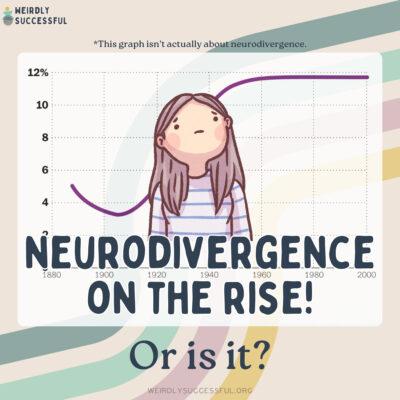
ADHD & Autism on the Rise: Are There More Neurodivergent People Now?

Why it seems there are more neurodivergent people now than before, when in fact we've always been here.

Read moreADHD & Autism on the Rise: Are There More Neurodivergent People Now?
Content type: Glossary Entry📖Glossary Entry

internalised ableism

Internalised ableism is a psychological construct that refers to the internalisation of negative beliefs, stereotypes, and prejudices about disabilities that are prevalent in society.

It involves self-stigmatization and the development of a negative self-concept based on one's disability and onboarding negative beliefs said to us by parental figures, teachers, grown-ups and society in general.

Read moreinternalised ableism
Content type: Glossary Entry📖Glossary Entry

waiting mode

Waiting mode is a psychological state characterized by heightened anticipation or anxiety while awaiting a specific outcome or event.

In the neurodivergent, especially ADHD community it usually means the period before an event that needs focus or attention spent in a sort of paralysing waiting mode, not being able to do little else until the event is over.

Read morewaiting mode
Content type: Glossary Entry📖Glossary Entry

decompressing

Decompressing refers to engaging in activities or behaviours that allow a person to relax, unwind, and alleviate stress or sensory overload.

This term is particularly significant in the neurodivergent community as we often experience heightened sensitivity to environmental stimuli, leading to increased stress and anxiety levels.

Making sure to have time to decompress after especially taxing …

Read moredecompressing
Content type: Glossary Entry📖Glossary Entry

transitions

Transitioning, in the context of neurodiversity, refers to the process of moving from one state, activity, or place to another. It involves a shift in attention, focus, and cognitive resources.

For neurodivergent individuals, it may require additional time, support, and strategies to manage effectively.

Transitioning can encompass a wide range of changes, from minor daily shifts like moving …

Read moretransitions
Content type: Glossary Entry📖Glossary Entry

context switching

Context switching refers to the cognitive process of shifting attention between different tasks or mental states. It involves disengaging from one task and engaging in another, requiring the brain to change its focus, rules, and objectives.

This process can be mentally taxing due to the cognitive load involved in stopping one task and starting another, shifting gears to focus on the new task, and …

Read morecontext switching
Content type: Article💡Article

The Weird Winter Holiday Workbook – a neurodivergent-friendly Christmas-ish planner

There are lots of winter holiday planners out there. Not a lot of them are particularly ADHD, Autism or neurodivergence-friendly, though! So we created this one to reduce holiday stress, hassle and overwhelm so you can: Waiting for you on the pages ahead is a combination of guided self-care and planning pages to help you …

Read moreThe Weird Winter Holiday Workbook – a neurodivergent-friendly Christmas-ish planner
Content type: Glossary Entry📖Glossary Entry

ADHD tax

ADHD tax is a casual term used to describe the additional costs, both tangible and intangible, that ADHD individuals often face due to their neurodivergence, especially struggles due to executive dysfunction.

Read moreADHD tax
Content type: Glossary Entry📖Glossary Entry

penguin pebbling

In a neurodivergent context, the expression is used to describe a common neurodivergent behaviour of people collecting and giving loved items to others - "this made me think of you, I think you'll like this, I thought this was pretty and I want you to have it".

Read morepenguin pebbling
Content type: Glossary Entry📖Glossary Entry

info dumping

Info dumping is the casual name referring to the act of sharing an extensive amount of information, usually about a subject or topic the person is extremely passionate about.

Read moreinfo dumping
Content type: Glossary Entry📖Glossary Entry

double empathy

The double empathy problem is a concept in neurodiversity studies that suggests a mutual misunderstanding between neurodivergent and neurotypical individuals.

Read moredouble empathy
Content type: Glossary Entry📖Glossary Entry

deep pressure

Deep pressure is a natural sensory need where firm, consistent pressure (like heavy blankets or tight hugs) helps tension melt away from your body. Many people naturally seek this through things like snug clothing or curling up under blankets - it's your nervous system's way of finding calm and comfort.

Read moredeep pressure
  • Previous
  • Page 1
  • Interim pages omitted …
  • Page 4
  • Page 5
  • Page 6
  • Page 7
  • Page 8
  • Page 9
  • Next

Free Resources for Neurodivergent Adults

Get our research-backed, experience-validated strategies & guides for a neurodivergent work & life that you can adapt to what success looks like to you.

Create a free account to get your goodies!

Is the button not working? No worries!
Sometimes ad-blocks stop all pop-ups, even if they are not ads.
This might be the case if nothing happens when you click the button.
Here’s another, non-pop-up way to sign up, please try if this works!

By signing up you allow us to send you Weirdly Successful’s newsletter with practical tips, strategies, and optional training material.
You can unsubscribe any time. Our Privacy Policy makes for a great summer reading!

Weirdly Successful is a 100% neurodivergent-run non-profit, developing strategies & frameworks for neurodivergent adults.

  • E-mail
  • Instagram
  • Mastodon
  • Tumblr
  • Pinterest

DISCLAIMER: All content on this website is for informational purposes only, and does not substitute for medical advice. For medical advice, diagnosis or treatment, consult a medical professional or healthcare provider.

While we strive to represent up-to-date and scientifically accurate information, our authors are not medical professionals unless where specifically noted. All opinions are the authors’ own.

Weirdly Successful’s authors and collaborators are not liable for risks or issues
associated with using or acting upon the information on our site.

All original content Copyright © 2026 · Weirdly Successful · All Rights Reserved.

Privacy Policy