“Don’t people grow out of ADHD?”
People don't grow out of ADHD. Symptoms change from external hyperactivity to internal restlessness, and life transitions often unmask previously hidden ADHD.

Weirdly Successful
Dedicated to helping you understand, navigate and enjoy your weird & wonderful neurodivergent life.

People don't grow out of ADHD. Symptoms change from external hyperactivity to internal restlessness, and life transitions often unmask previously hidden ADHD.
Justice sensitivity is the heightened awareness of rule violations and inconsistencies, paired with an intense emotional and physiological response. For many neurodivergent people, fairness and consistency function as essential navigational tools when you can't reliably read social cues or predict what will happen next. When rules are applied inconsistently or stated expectations don't match actual consequences, your nervous system registers this as a genuine threat to your ability to navigate the world safely. The intensity of your reaction reflects the pattern violation itself, regardless of the moral weight of the situation. Justice sensitivity is morally neutral—it tells you when a rule has been violated, but not whether the rule was good or fair in the first place.
Exploring the impact of internalised ableism made me re-evaluate my misinterpreted autistic and ADHD traits.
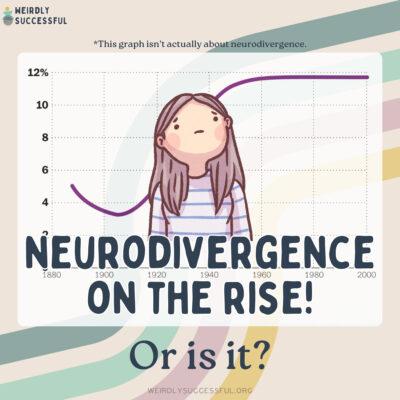
Why it seems there are more neurodivergent people now than before, when in fact we've always been here.
Internalised ableism is a psychological construct that refers to the internalisation of negative beliefs, stereotypes, and prejudices about disabilities that are prevalent in society.
It involves self-stigmatization and the development of a negative self-concept based on one's disability and onboarding negative beliefs said to us by parental figures, teachers, grown-ups and society in general.
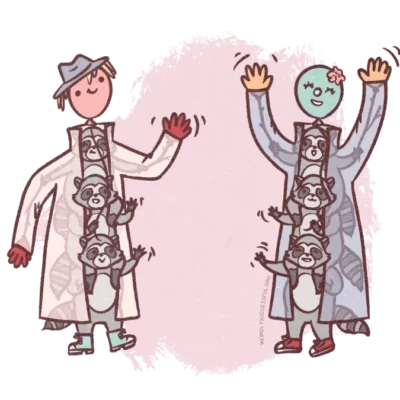
The double empathy problem is a concept in neurodiversity studies that suggests a mutual misunderstanding between neurodivergent and neurotypical individuals.
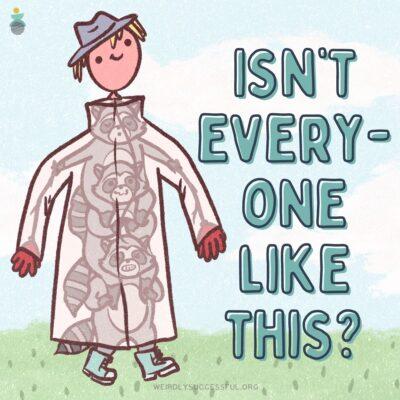
"How did no one ever notice??"
The amount of times this sentence is heard in our house, along with the dramatically exaggerated waving of arms, would definitely qualify for a sitcom catchphrase.
You see, reader, I'm what they call "late-diagnosed".
"Late" is relative, of course. For ADHD, "late diagnosis" can mean anything from above 60 for those above 60 to 25 for those who are 25. For Autism, some guidelines even go down to 12 as "late".
My own ADHD stamp (with the bonus traits from a handful of other neurodivergent conditions) came at 37, with the fancy PDF attachment. We already knew, we just didn't know know.
Once confirmed, though, not one week goes by when I don't do, say or remember something that so clearly reveals a neurodivergent trait that's always been there.
So how did no one ever notice?
Spiritual bypassing is a dismissive behaviour, meaning the use of spiritual explanations to dismiss, diminish or avoid dealing with complicated emotions, uncomfortable experiences or facing the complex and often harsh realities of life. It's part magical thinking and part toxic positivity.
The curb-cut effect refers to the phenomenon that policies initially created to serve a marginalized group end up serving a much more significant portion of society, benefiting even more people than it was originally designed for.
Neuroaffirming or neuro-affirmative refers to practices, approaches, or environments that recognize and affirm the neurodiversity of society and the neurodivergence of individuals.
Unmasking is when you slowly learn to allow your neurodivergence to present itself and you don't try to hide yourself. However, to unmask is a privilege, as you need a safe space to do it.
High-masking refers to a person who is able to mask so efficiently that they ‘pass’ as neurotypical. High-masking is often one of the reasons women go undiagnosed – unfortunately, many assessors completely ignore masking and dismiss the experience of the individual. References1↑ Sibley, M. H., Arnold, L. E., Swanson, J. M., Hechtman, L. T., Kennedy, …
Masking is a partly unconscious effort to hide or suppress the manifestations of your neurodivergence. It is an exhausting process that many of us do to "fit in" more. Many people start to mask to avoid abuse, discrimination, bullying, harm and ableism.
The term allistic refers to people who are not autistic. Neurodivergent and neurotypical people can both be allistic if they are not autistic.
Ableism is discrimination and social prejudice against people with physical or mental disabilities. In an ableist society, it’s assumed that the “normal” way to live is as a non-disabled person and that every disabled person needs to or wants to “get rid of” their condition.
Talking about neurodivergence is not as clear-cut as it seems. The history of the treatment and acceptance of neurodivergent conditions is long and not without stigma and harm. This means that many words used throughout the decades have harmful connotations or dehumanising ideas behind them. Since language cannot be changed overnight, these expressions are still …